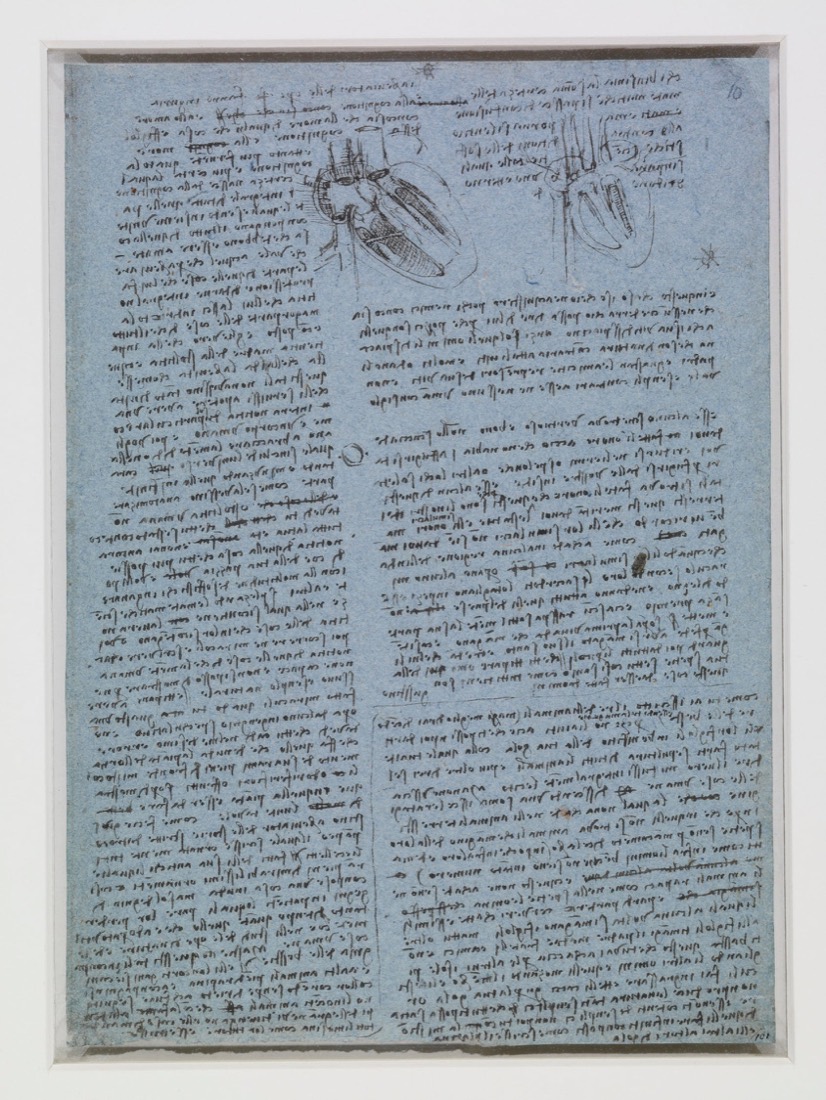
Folio 8e5c8f21
Italiano
Tre brandelli di memoria idraulica: il primo sugli scoli delle paludi e le paratie, il secondo su un corollario che forse trattava di pressione statica nei condotti, il terzo su acque coperte da tavole e barche — tutti parlano di superfici che si frappongono al moto, di ostacoli che dividono il flusso e ne alterano la forza. Non è l’acqua in sé il soggetto, ma ciò che la incrocia: tavole, paratie, letti artificiali. L’ipotesi è che questi frammenti siano tracce di un’unica indagine sulle resistenze idrauliche, dove ogni ostacolo — sia esso una tavola, una paratia o il letto di un canale — viene studiato non per sé, ma per il modo in cui frena, devia o moltiplica la spinta dell’acqua. Forse Leonardo cercava una legge generale della perdita di carico nei canali, dove ogni superficie immersa genera attrito e turbolenza misurabile. La pagina, ancora una volta, trattiene ciò che la mente avrebbe disperso nel moto stesso dell’acqua.
English
Three scraps of hydraulic memory: the first on the drainage of marshes and sluices, the second on a corollary perhaps concerning static pressure in conduits, the third on waters covered by planks and boats — all speak of surfaces interposed in the motion, of obstacles that divide the flow and alter its force. It is not the water itself that is the subject, but what crosses it: planks, sluices, artificial beds. The hypothesis is that these fragments are traces of a single inquiry into hydraulic resistances, where every obstacle — be it a plank, a sluice, or the bed of a canal — is studied not for itself, but for how it slows, deflects, or multiplies the thrust of the water. Perhaps Leonardo sought a general law of head loss in channels, where every immersed surface generates measurable friction and turbulence. The page, once again, holds what the mind would have scattered in the very motion of the water.