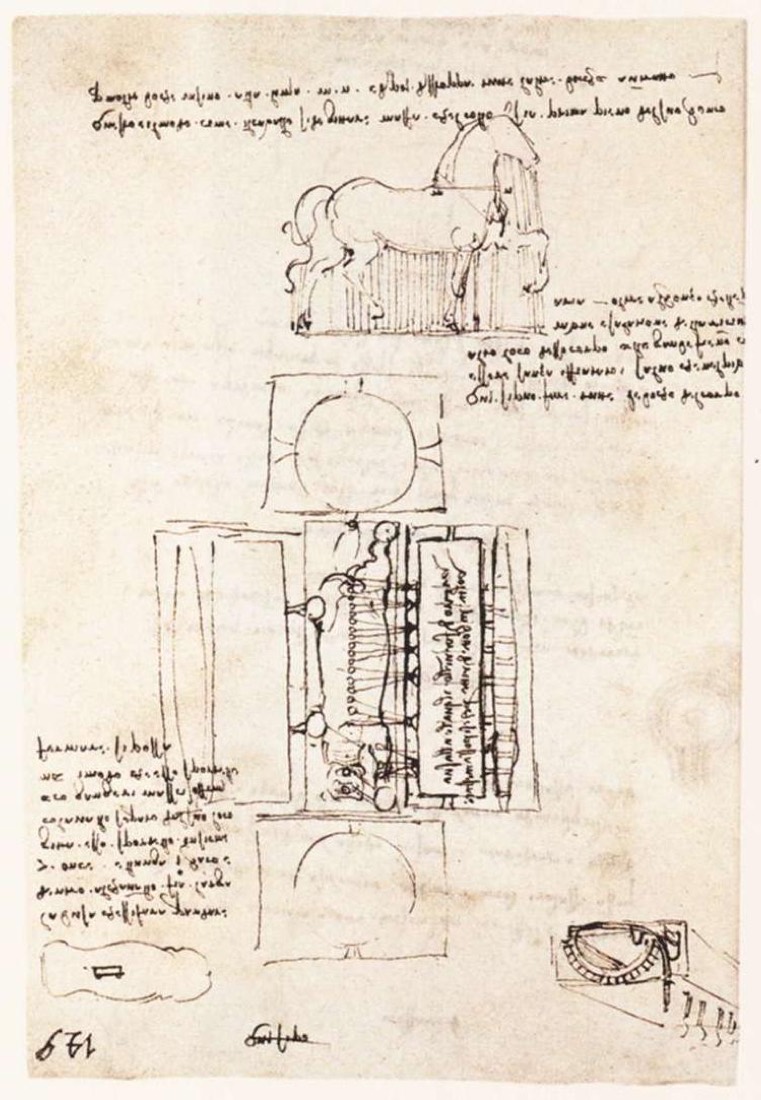
Folio 0792ffad
Italiano
Padre carissimo,
It is the letter R that has been turning in me these weeks, the one that rolls like the carts on the bridge at Vinci when the clay comes down from the hills and the river runs high and the women call to one another over the water. Not the sharp R of the French, which is a blade cutting the throat of a word, but the Italian R, the one that lives in the throat like a small storm before it breaks into the world. You remember how I used to drag it out when I was learning to write, how my hand would tremble and the line would thicken where the tongue stumbles. Now it is the same with the work. The R of the ruota—the wheel that turns the millstone, the one that grinds the wheat fine enough for bread—this is the shape the mind makes when it is working true.
I have been drawing the waterwheels at Amboise, the ones that lift the water up to the gardens of the king. The masons say it cannot be done, that the wood will rot in the wet, that the iron will rust. But I have drawn the curve of the blade so that the water does not strike it straight but kisses it, and the wheel turns slow and steady, as if the river itself is resting. The R of the wheel is not the R of the river; one is the maker, the other the made. Yet both are the same letter if you look close enough—the curve, the return, the place where the line leaves the body of the world and comes back to it.
The hand still trembles, but the R holds steady. It is the only letter that does.
I have sent you a small drawing of the wheel, pressed between these pages. It is not for showing, only for holding. When you run your thumb over the ink, you will feel the shape of the R in the paper, how it rises like the ridge of a hill. That is the truth of it.
The canal here is quiet in the mornings now. The ducks do not quack as loud as they did in summer. The light comes in slanted, as if God is holding a candle just out of reach.
vostro figlio affettuoso.
English
Dearest Father,
It is the letter R that has been turning in me these weeks, the one that rolls like the carts on the bridge at Vinci when the clay comes down from the hills and the river runs high and the women call to one another over the water. Not the sharp R of the French, which is a blade cutting the throat of a word, but the Italian R, the one that lives in the throat like a small storm before it breaks into the world. You remember how I used to drag it out when I was learning to write, how my hand would tremble and the line would thicken where the tongue stumbles. Now it is the same with the work. The R of the ruota—the wheel that turns the millstone, the one that grinds the wheat fine enough for bread—this is the shape the mind makes when it is working true.
I have been drawing the waterwheels at Amboise, the ones that lift the water up to the gardens of the king. The masons say it cannot be done, that the wood will rot in the wet, that the iron will rust. But I have drawn the curve of the blade so that the water does not strike it straight but kisses it, and the wheel turns slow and steady, as if the river itself is resting. The R of the wheel is not the R of the river; one is the maker, the other the made. Yet both are the same letter if you look close enough—the curve, the return, the place where the line leaves the body of the world and comes back to it.
The hand still trembles, but the R holds steady. It is the only letter that does.
I have sent you a small drawing of the wheel, pressed between these pages. It is not for showing, only for holding. When you run your thumb over the ink, you will feel the shape of the R in the paper, how it rises like the ridge of a hill. That is the truth of it.
The canal here is quiet in the mornings now. The ducks do not quack as loud as they did in summer. The light comes in slanted, as if God is holding a candle just out of reach.