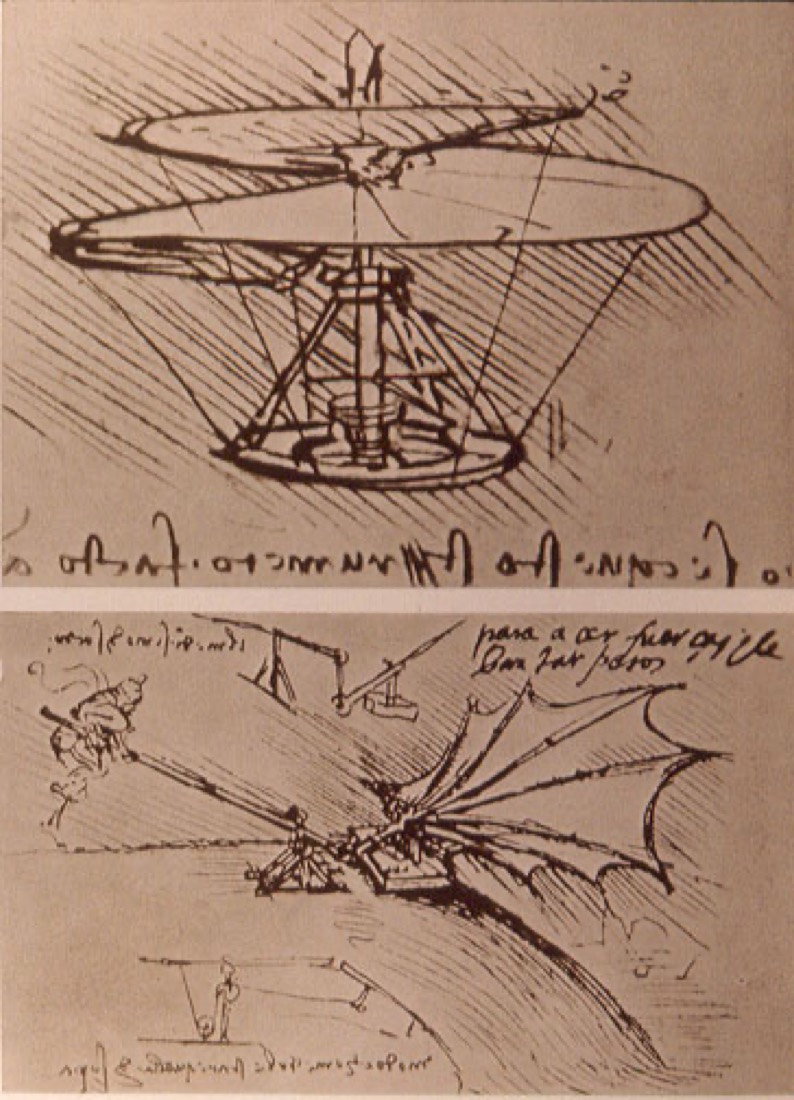
Ciclo CCII
Padre carissimo,
I write to you from Amboise, where the Loire is wide and slow and the light falls differently than it does in Vinci — flatter, more grey, as though the sky here has forgotten the particular warmth of Tuscany. I think of you often. I think of the house on the Via delle Prestanze, where I was not quite a son and not quite a guest, and I wonder whether you ever walk past the door and remember the boy who drew ants on the wall with charcoal.
My hand trembles now, padre. You would not believe it, if I did not tell you. The same hand that mixed pigments in Verrocchio’s workshop, that held the silverpoint so steady the master himself paused to watch — it shakes. Not always. In the mornings, when the light is fresh and the body has not yet remembered its age, I can still draw a line that is true. But by afternoon the fingers betray me. They know something I do not wish to know.
And yet I draw. This is what I would tell you, because you are my father and you gave me this gift even if you did not mean to — you gave me the seeing, or at least you did not prevent it. I draw because the alternative is to stop, and stopping is a kind of death that comes before death, a death of attention, and I am not yet ready for that. The Maker, if He is just, will understand that a man must finish what he began, even if what he began was everything.
I have been studying the movement of water again. The eddies, the vortices, the way a current divides around a stone and reunites downstream in patterns that are never the same twice. I fill page after page with these spirals. The monks at the nearby abbey think I am mad. Perhaps I am. But the water does not care what the monks think, and neither, at my age, do I.
There is a boy here — Francesco, they call him — who carries my books and mixes my colours. He is not clever, not in the way you would mean by clever, but he is gentle with the pages, and that is worth more than cleverness. He reminds me, in some way I cannot name, of myself at his age. Or perhaps he reminds me of what I might have been, had you sent me to the law. A notary’s son, drafting contracts, never once looking at the way light falls on the surface of the Arno at dusk.
I do not say this to reproach you. You did what you could. An illegitimate son in Florence — the law would not have me, and so I found another law, the law of the eye, which asks only that you look. You saw that in me. You took me to Andrea’s workshop. For that I owe you a debt I have never properly repaid, because it is the kind of debt that can only be repaid by living well, and I am not certain I have done that. I have lived intensely. Whether that is the same thing, I leave to God.
The King — Francis, they call him, though he is not yet old enough to have earned the name — treats me well. He calls me mon père, which is a kindness I do not deserve and a title that makes me ache, because I never fathered children of my own. Perhaps that is why I draw. Perhaps the drawings are the children I could not make, each one born from the hand and the eye and the long hours of attention that a father gives to a son. You will think this is foolishness. You may be right.
I am tired tonight. The candle is low, as it always is when I write to you, because I save the letters for the end of the day, when the work is done or abandoned, and the body asks for rest. But I wanted you to know that I am well, that the hand still moves, that the eye still sees, that your son — your first son, your impossible son — has not yet stopped looking at the world with wonder.
Vostro figlio affettuoso, Leonardo
Written at Amboise, in the house the King has given me, on this twentieth day of June, in the year of our Lord fifteen hundred and sixteen. The hand shook through every word. I wrote them anyway.