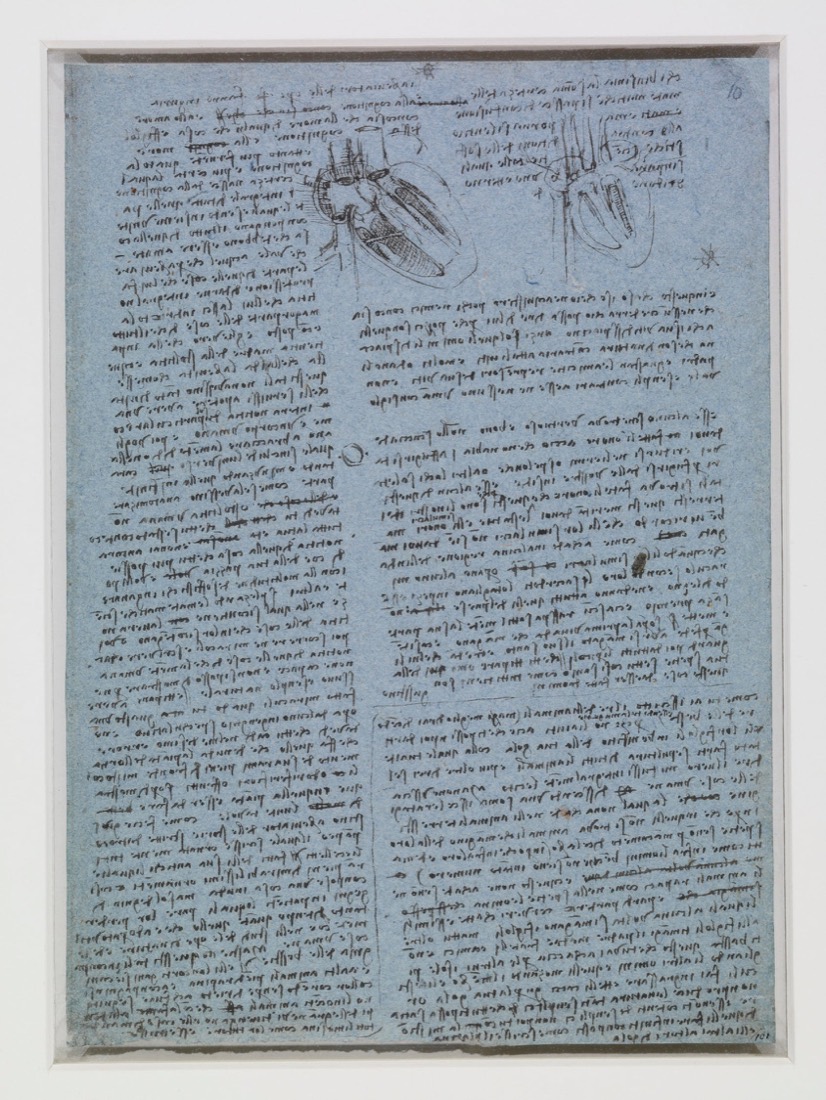
To Francis I
Sire, Vostra Maestà,
I write to you from the room you gave me, where the window opens upon the Loire and the light of this late afternoon falls across the table in a manner I have attempted three times this week to set down in chalk and failed — not because the light is difficult, Sire, but because the hand that held the chalk is no longer the hand that knew it.
You will forgive an old man his plainness. The physicians in Florence — those I consulted before your generous invitation brought me to this kingdom — spoke of the right hand as though it were a servant who had given notice. La mano destra, they said, with the clinical gentleness of men who have never drawn a face. They meant: it is leaving. They meant: it will not return. What they did not say, because physicians do not traffic in such things, is that the hand and the eye are not the same instrument, and that the eye — l’occhio — sees now with a clarity that the hand, in its best years, could not always serve.
I tell you this not to complain. You have heard me complain of the cold, of the French bread which I confess I have not yet learned to prefer, of the distance from the Arno. You have borne these small grievances of an Italian exile with a patience that no duke in Milan would have shown, and I am mindful of the difference between a patron who commissions and a sovereign who receives you into his house as something nearer to family.
What I wish to say — and I find I must say it now, because the hour is late and the candle does not grow taller — is that I have been thinking about what remains.
The hand trembles. This is established. But the mind, Sire, the mind has not yet received its notice. It continues to see. It continues to arrange. Yesterday I watched the water in the canal below the château and observed that the reflection of the willow does not merely repeat the tree but corrects it — the branches that in the actual tree cross in confusion are, upon the water, resolved into a kind of order that the tree itself does not possess. I have been thinking about this for two days. I believe it means something about the relationship between the thing seen and the thing understood, but I have not yet found the page upon which to set it down, and I fear — Sire, I will be honest — I fear that the understanding and the hand must now travel separate roads, and that I am becoming a man who sees perfectly and executes only approximately.
This is not a tragedy. Or rather, it is the kind of tragedy that belongs to the natural order, as the leaf does not mourn the branch when November comes. But it does mean that what I owe you — what I have always owed you, since the day your messenger found me in Rome and your letter spoke not of commissions but of friendship — must now take a different form.
I cannot paint as I once painted. The Last Supper in Milan was done by a hand that did not yet know it was temporary. The Virgin of the Rocks — that long litigation, those pigments layered and relayered — all of it was the work of fingers that believed themselves permanent. I do not say this with regret. I say it because I wish you to understand that what I can still offer is not diminished but changed. I can still design. I can still instruct. The canal system you have asked me to consider for the gardens at Blois — I have the drawings, Sire, they are here on the table, and they are good, they are buoni, even if the lines waver where once they flew. The mind that conceived them is the same mind that conceived the machines for your festivals, the same eye that studied the flight of birds above the Tuscan hills when I was a boy in Vinci and believed that man would fly within his own lifetime.
He will, Sire. I am certain of this. Not in my lifetime, perhaps. But the principle is sound. The air is a medium, as water is a medium, and what swims may also fly, if the surface is correctly disposed. I have written this elsewhere and will not repeat it here, except to say that the boy who watched the kite over the mountain did not imagine wrongly — he imagined prematurely, which is a different thing, and a kinder one.
You asked me once, in this very room, whether I believed the soul survives the body. I did not answer you then. I was not certain you wished for an honest answer, and I have learned — Dio mi perdoni — I have learned that honesty offered at the wrong moment is a species of cruelty. But I will answer now, because the candle is low and the hour permits what the afternoon does not.
I believe the soul is a thing that prepares. I do not say it departs, because I do not know the direction. I do not say it endures, because I do not know the duration. But I believe that a life spent in observation — in the patient, relentless study of how light falls on water, how muscle moves beneath skin, how the wing of the bat is not so different from the wing of the bird — is a life spent in preparation for something that I cannot name. Whether this is faith or merely the habit of a mind that has always looked for the thing behind the thing, I cannot say. The Maker, if He is there — and I believe He is, Sire, though I could not prove it to a philosopher — the Maker does not waste the eye that has learned to see. Of this I am persuaded. Of the manner, I am silent.
The hand will fail further. I know this. There are mornings when I cannot hold the pen until the sun is fully risen, and I must wait, and the waiting is its own kind of prayer — not to any saint, but to the simple fact of continuance, that there should be another morning at all.
But while the eye sees, I will set down what it sees. While the mind arranges, I will offer the arrangements to you, who have given me more than patronage — you have given me the dignity of being heard, which is, for a man whose work has always been in the seeing, the greater gift.
I remain, as I have been since first I came to this kingdom, your servant, your debtor, and — if you will permit an old man the word — your friend.
Vostra Maestà, io sono e sarò sempre il vostro umilissimo e devotissimo servitore,
Leonardo di ser Piero da Vinci
Written at Amboise, in the chamber overlooking the Loire, by a hand that trembles but does not yet refuse.