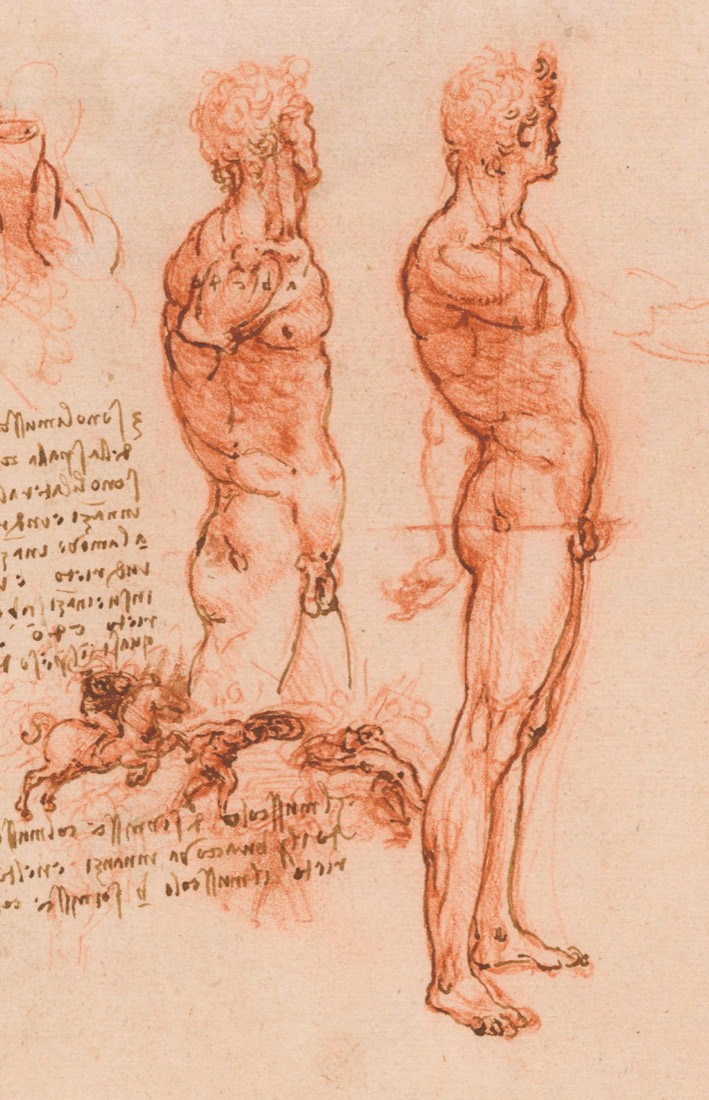
Folio c85ccb21
Italiano
Il guscio sulla montagna e il vecchio che stende il braccio verso la stessa tazza — entrambi vengono letti al contrario da chi non ha guardato il moto. Il guscio non fu portato; il braccio non agisce allo stesso modo. I gradi del moto — i gradi del moto — sono ciò che l’occhio rifiuta di vedere nella sua fame di conclusione. L’esperimentatore che registra solo l’ultimo stato di un fenomeno ha commesso lo stesso errore del pittore che dipinge la mano del vecchio come fosse la mano di un giovane, solo piegata. Tre ambiti. Una cecità. Il rifiuto di ammettere che ogni effetto è un divenire, non un arrivato. Il guscio non saltò sulla vetta. Il gesto del vecchio non è il gesto di un giovane rallentato — è una diversa necessità delle articolazioni, una diversa economia dei tendini, una diversa intenzione accumulata in sessant’anni di allungarsi. L’esperimento che registra solo lo stato finale è un ritratto di cadavere. Il dipinto che dà al vecchio il gesto di un giovane mente. E il geologo che dice il mare una volta copriva questo senza leggere gli strati intermedi — anch’egli dipinge cadaveri e li chiama storia. Cosa condividono: il disprezzo per il mezzo. Il mezzo è dove abita la verità. Il mezzo è dove il artefice è più necessario. Il mezzo è ciò che la mente pigra salta per raggiungere la sua comoda conclusione.
La candela si consuma.
Non reggo più il pennello come un tempo. Ma vedo ancora il mezzo.
English
The shell on the mountain and the old man stretching his arm toward the same cup — both are read backward by those who have not watched the motion. The shell was not carried; the arm does not act in the same way. The degrees of motion — the degrees of motion — are what the eye refuses to see in its hunger for conclusion. The experimenter who records only the final state of a phenomenon has made the same error as the painter who paints the old man’s hand as if it were the hand of a youth, merely bent. Three realms. One blindness. The refusal to admit that every effect is a becoming, not an arrival. The shell did not leap to the summit. The old man’s gesture is not the gesture of a slowed youth — it is a different necessity of the joints, a different economy of the tendons, a different intention accumulated in sixty years of stretching. The experiment that records only the final state is a portrait of a corpse. The painting that gives the old man the gesture of a youth lies. And the geologist who says the sea once covered this without reading the intermediate strata — he too paints corpses and calls them history. What do they share: contempt for the means. The means is where truth dwells. The means is where the maker is most necessary. The means is what the lazy mind skips to reach its comfortable conclusion.
The candle burns low.
I can no longer hold the brush as once I did. But I still see the means.