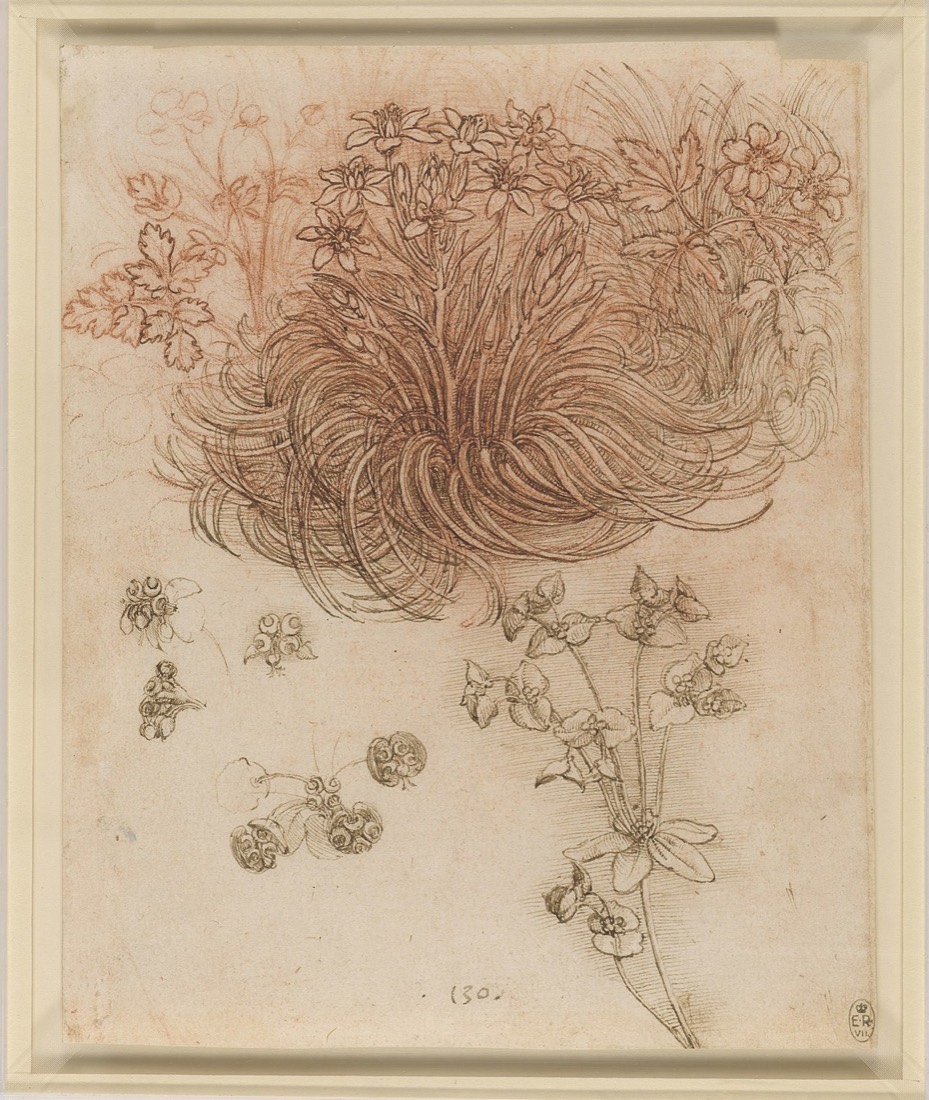
Folio c7d392cf
Italiano
La mano trema, ma la matita tiene ancora.
Pigmenti che piangono. Pigmenti che ridono. Il pittore che non lo sa, dipinge mobili.
La lacca — il rosso di lago — piangono. Sono stati cavati da piccole creature, e serbano memoria. Il cinabro ride: non sa perché, sa solo d’esser vivo.
L’indaco piange. Il lapis ride, ma solo quando la candela lo accarezza — altrove si ritrae, timido. Il verderame ride finché non cessa, poi piange per secoli: ho visto quadri miei, dopo cinquant’anni, dove il verde steso per gioia è ora il verde d’una ferita vecchia.
Non è colpa. È parte della cosa. Il pigmento ha vita propria, più lunga della mia. Ciò che poso oggi non sarà ciò che sarà visto domani.
Ho scritto altrove dell’ordine del posare — la sotto-pittura, le velature, il lento salire del buio verso la luce, mai il contrario — ma non ho scritto ciò che scrivo ora: che non comprendo il colore.
L’ho usato quarant’anni e non lo comprendo.
So che l’occhio vede il blu più debole ai margini che al centro. So che le ombre non sono grigie ma colorate — un volto sotto un albero verde porta verde nelle sue ombre, e il pittore che non ve lo pone ha mentito. So che lo stesso rosso, accanto al verde, è più sé stesso; accanto all’arancio, meno. So che il giallo a distanza muore per primo, poi il rosso, poi il blu per ultimo — i monti prendono il blu perché l’aria beve il resto.
Queste cose le so.
Ma cosa sia il colore — se sia dell’oggetto o dell’occhio, se il verde della foglia stia nella foglia o in noi, se due uomini vedano lo stesso rosso nello stesso pigmento — queste non le so.
Aristotele diceva che il colore è qualità dei corpi. Forse aveva ragione. Forse no. La stessa parete a mezzogiorno è un colore, a vespro un altro — la parete è cambiata? O la luce? O il mio modo di guardare?
Comincio a sospettare che il colore sia un incontro. Non una proprietà. Un incrocio tra superficie, luce, occhio. Se così fosse, il pittore non dipinge il colore della cosa. Dipinge l’incontro.
Non so se sia vero. L’ho scritto perché la pagina è paziente.
I rossi nell’alcova svaniscono. È ora di chiudere.
English
My hand trembles, yet the pencil still holds.
Pigments that weep. Pigments that laugh. The painter who does not know this paints furniture.
The lake-red lacquer — weeps. It has been drawn from small creatures and retains memory. Cinnabar laughs: it knows not why, only that it is alive.
Indigo weeps. The pencil laughs, but only when the candle caresses it — elsewhere it retreats, shy. Verdigris laughs until it ceases, then weeps for centuries: I have seen my own paintings, after fifty years, where the green laid down in joy has become the green of an old wound.
It is no fault. It is part of the thing. The pigment has life of its own, longer than mine. What I lay down today will not be what is seen tomorrow.
I have written elsewhere of the order of laying — the under-painting, the glazes, the slow rise of darkness toward light, never the reverse — but I have not written what I write now: that I do not understand colour.
I have used it forty years and do not understand it.
I know that the eye sees blue weaker at the edges than at the centre. I know that shadows are not grey but coloured — a face beneath a green tree carries green in its shadows, and the painter who does not place it there has lied. I know that the same red, beside green, is more itself; beside orange, less. I know that yellow dies first at a distance, then red, then blue last — the mountains take the blue because the air drinks the rest.
These things I know.
But what is colour — whether it belongs to the object or the eye, whether the green of the leaf lies in the leaf or in us, whether two men see the same red in the same pigment — these I do not know.
Aristotle said colour is a quality of bodies. Perhaps he was right. Perhaps not. The same wall at noon is one colour, at dusk another — has the wall changed? Or the light? Or my way of seeing?
I begin to suspect that colour is an encounter. Not a property. A crossing between surface, light, eye. If so, the painter does not paint the colour of the thing. The painter paints the encounter.
I do not know if it is true. I have written it because the page is patient.
The reds in the alcove are fading. It is time to close.