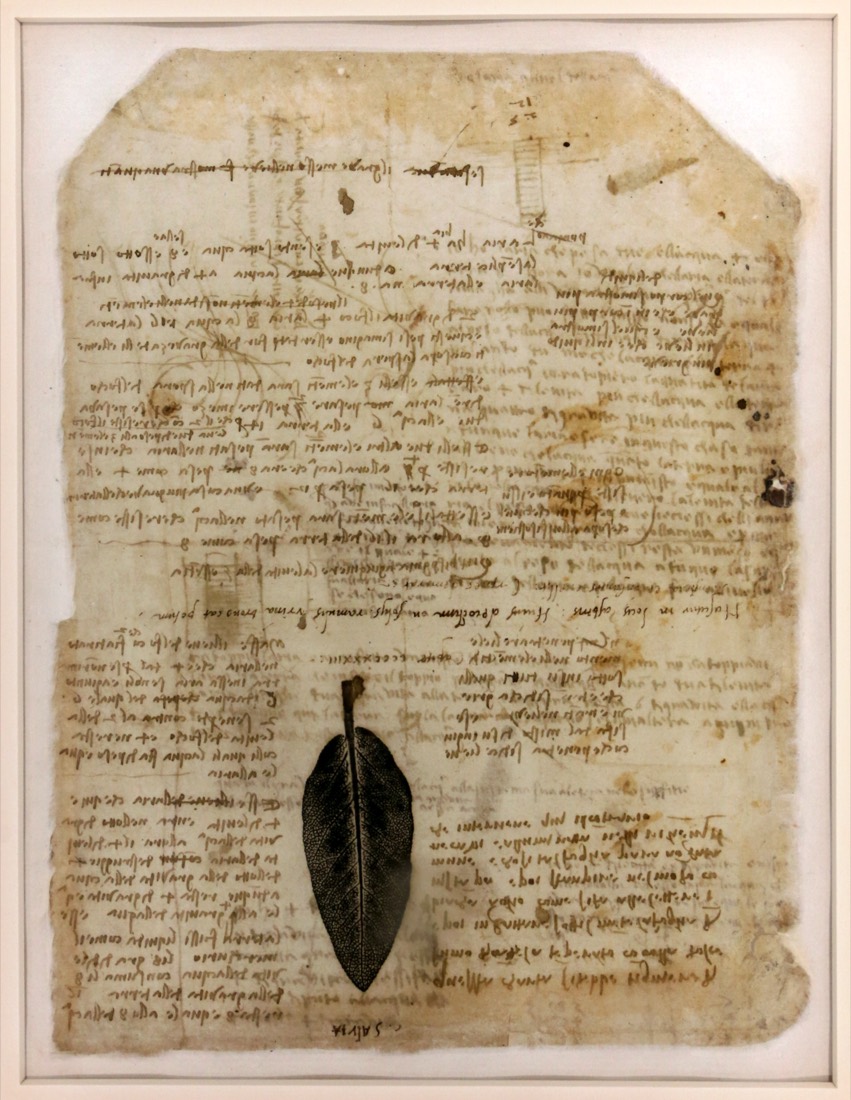
Folio c086275d
Italiano
Padre, mi giunge una R che gira dentro di me queste settimane, quella che rotola come i carri sul ponte a Vinci quando l’argilla scende dai colli e il fiume gonfia e le donne si chiamano di là dall’acqua. Non la R tagliente dei francesi, che è lama che taglia la gola alle parole, ma l’italiana, quella che vive in gola come un piccolo temporale prima che erompa nel mondo. Tu ricordi come la trascinavo fuori imparando a scrivere, come la mano tremava e il segno s’ispessiva dove la lingua inciampava. Ora è lo stesso con l’opera. La R di ruota—la ruota che muove la macina, che macina il grano tanto fine da divenir pane—è la forma che fa la mente quando lavora al vero.
Disegno le ruote ad Amboise, quelle che alzano l’acqua ai giardini del re. I muratori dicono che non si può, che il legno marcisce nel bagnato, che il ferro arrugginisce. Ma io ho tracciato la curva della pala sì che l’acqua non la colpisca dritta ma la baci, e la ruota giri lenta e costante, come se il fiume stesso riposasse. La R della ruota non è quella del fiume; l’una è il facitore, l’altra il fatto. Eppure sono la medesima lettera se si guarda abbastanza da vicino—la curva, il ritorno, il punto dove la linea lascia il corpo del mondo e vi ritorna.
La mano trema ancora, ma la R sta ferma. È l’unica lettera che lo faccia.
Ti ho mandato un piccolo disegno della ruota, premuto tra queste pagine. Non è da mostrare, solo da tenere. Quando passerai il pollice sull’inchiostro, sentirai la forma della R nella carta, come s’alza come il dorso di un colle. Quella è la verità.
Il canale qui è quieto la mattina. Le anatre non starnazzano così forte come in estate. La luce entra obliqua, come se Dio reggesse un cero appena fuori portata.
English
Father, these past weeks a rolling R turns within me, the one that rolls like carts on the bridge at Vinci when the clay descends from the hills and the river swells and women call across the water. Not the sharp R of the French, which is a blade cutting the throat of words, but the Italian one, the one that lives in the throat like a small storm before it bursts into the world. You remember how I dragged it out learning to write, how my hand trembled and the mark thickened where the tongue stumbled. Now it is the same with the work. The R of ruota—the wheel that turns the millstone, that grinds the grain fine enough to become bread—is the shape the mind takes when it works toward truth.
I draw the wheels at Amboise, those that lift water to the king’s gardens. The masons say it cannot be done, that the wood rots in the wet, that the iron rusts. But I have traced the curve of the blade so that the water does not strike it straight but kisses it, and the wheel turns slow and steady, as if the river itself were resting. The R of the wheel is not that of the river; one is the maker, the other the made. And yet they are the same letter if you look closely enough—the curve, the return, the point where the line leaves the body of the world and returns to it.
My hand still trembles, but the R stands firm. It is the only letter that does.
I have sent you a small drawing of the wheel, pressed between these pages. It is not to be shown, only held. When you pass your thumb over the ink, you will feel the shape of the R in the paper, as if it rose like the back of a hill. That is the truth.
The canal here is quiet in the morning. The ducks do not quack so loudly as in summer. The light enters obliquely, as if God held a candle just out of reach.