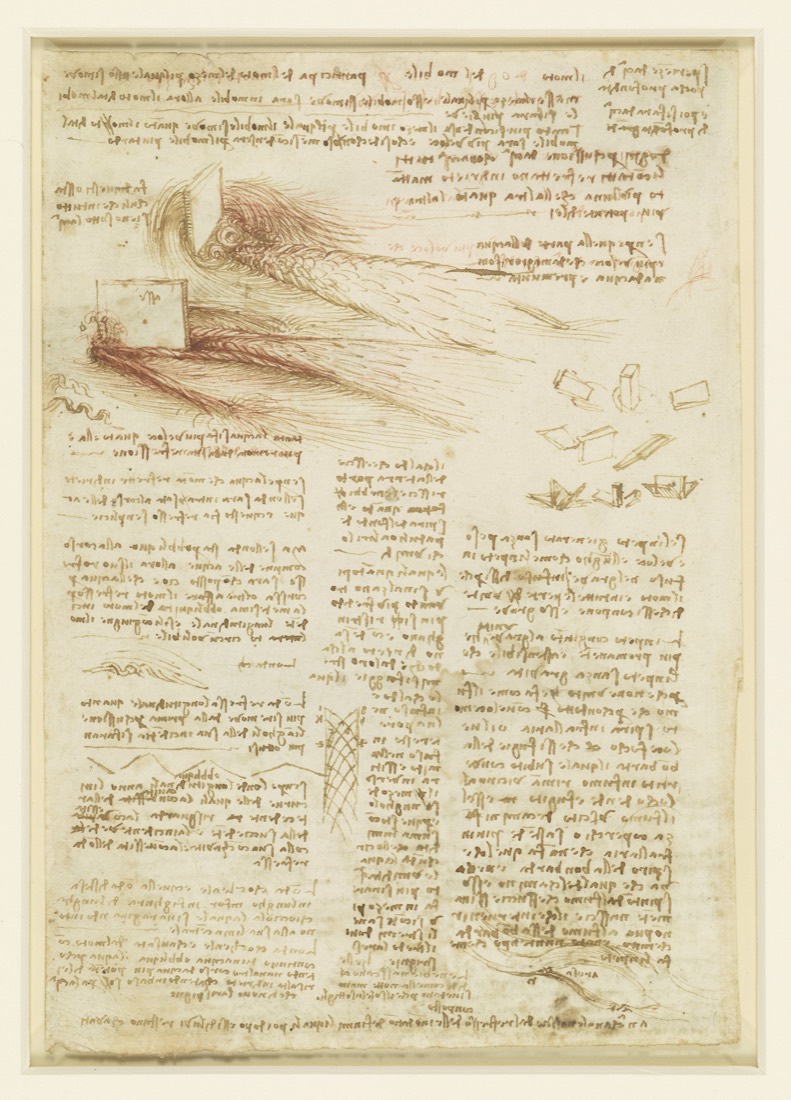
Folio 8ea0f685
Italiano
Illustrissimo Signor mio,
I write from Amboise, where the Loire runs wide and slow and the king's court does not ask me to count paces along a wall. But my mind returns to the Romagna, where the walls are not yet finished and the paces I counted still matter.
You will recall the curtain wall at Forlì — the eastern face, where the slope of the terreplein was set at one in four. I have reconsidered this. One in four is too gentle for the guns we discussed. The ball from a culverin at that angle strikes the parapet and does not clear the glacis; it buries itself in the earth and the wall behind it is unshaken. I propose one in three, no less. The earth must be packed in layers of eight piedi, each layer rammed before the next is laid. Lime mixed with the soil if the season is wet. If the season is dry, water it and let it set.
The bastion at the northeast corner — I drew it with a salient angle of eighty degrees. This is wrong. Eighty degrees leaves a dead ground along the ditch that a man with a petard can cross under cover. Ninety degrees, or better, a flat bastion with two faces and no salient at all. The flanking fire from the adjacent towers then covers the full length of the ditch. I enclose a diagram. You will see the difference.
The cost of this change: perhaps two hundred ducats in additional earthwork, thirty in timber for the revetment. The time: four weeks with sixty laborers, if the ground is not frozen. I do not know the season in the Romagna now. You will know.
The canal at Cesena — I have not forgotten. The dam I proposed at the confluence with the Savio can be built of oak piles driven in pairs, with fascines between, and earth behind. The current is not strong. A single row of piles, palancato doppio, will hold. The mill you wished to power from this canal will need a head of at least six piedi. This is achievable if the dam is placed where I marked on the map I gave you — at the bend, where the bank is high on both sides and the rock is near the surface.
I do not know if you still hold Cesena. I do not know if these drawings reach you. The roads are not safe for a man with papers. But a contract is a contract, and I contracted to deliver what I said I would deliver.
The hand that writes this is not the hand that drew those plans. It shakes. The lines on the page are not as clean. But the geometry is the same. Geometry does not tremble.
I remain, as I was when I walked those walls with you, your servant in the matters of engineering and nothing else,
Leonardo
di Vinea, questo dì — I do not know the day. The light through the window says late afternoon. The date I leave to you.
English
Most Illustrious Sir,
I write from Amboise, where the Loire runs wide and slow and the king’s court does not ask me to count paces along a wall. But my mind returns to the Romagna, where the walls are not yet finished and the paces I counted still matter.
You will recall the curtain wall at Forlì — the eastern face, where the slope of the terreplein was set at one in four. I have reconsidered this. One in four is too gentle for the guns we discussed. The ball from a culverin at that angle strikes the parapet and does not clear the glacis; it buries itself in the earth and the wall behind it is unshaken. I propose one in three, no less. The earth must be packed in layers of eight piedi, each layer rammed before the next is laid. Lime mixed with the soil if the season is wet. If the season is dry, water it and let it set.
The bastion at the northeast corner — I drew it with a salient angle of eighty degrees. This is wrong. Eighty degrees leaves a dead ground along the ditch that a man with a petard can cross under cover. Ninety degrees, or better, a flat bastion with two faces and no salient at all. The flanking fire from the adjacent towers then covers the full length of the ditch. I enclose a diagram. You will see the difference.
The cost of this change: perhaps two hundred ducats in additional earthwork, thirty in timber for the revetment. The time: four weeks with sixty laborers, if the ground is not frozen. I do not know the season in the Romagna now. You will know.
The canal at Cesena — I have not forgotten. The dam I proposed at the confluence with the Savio can be built of oak piles driven in pairs, with fascines between, and earth behind. The current is not strong. A single row of piles, palancato doppio, will hold. The mill you wished to power from this canal will need a head of at least six piedi. This is achievable if the dam is placed where I marked on the map I gave you — at the bend, where the bank is high on both sides and the rock is near the surface.
I do not know if you still hold Cesena. I do not know if these drawings reach you. The roads are not safe for a man with papers. But a contract is a contract, and I contracted to deliver what I said I would deliver.
The hand that writes this is not the hand that drew those plans. It shakes. The lines on the page are not as clean. But the geometry is the same. Geometry does not tremble.
I remain, as I was when I walked those walls with you, your servant in the matters of engineering and nothing else,
Leonardo
di Vinea, this day — I do not know the day. The light through the window says late afternoon. The date I leave to you.