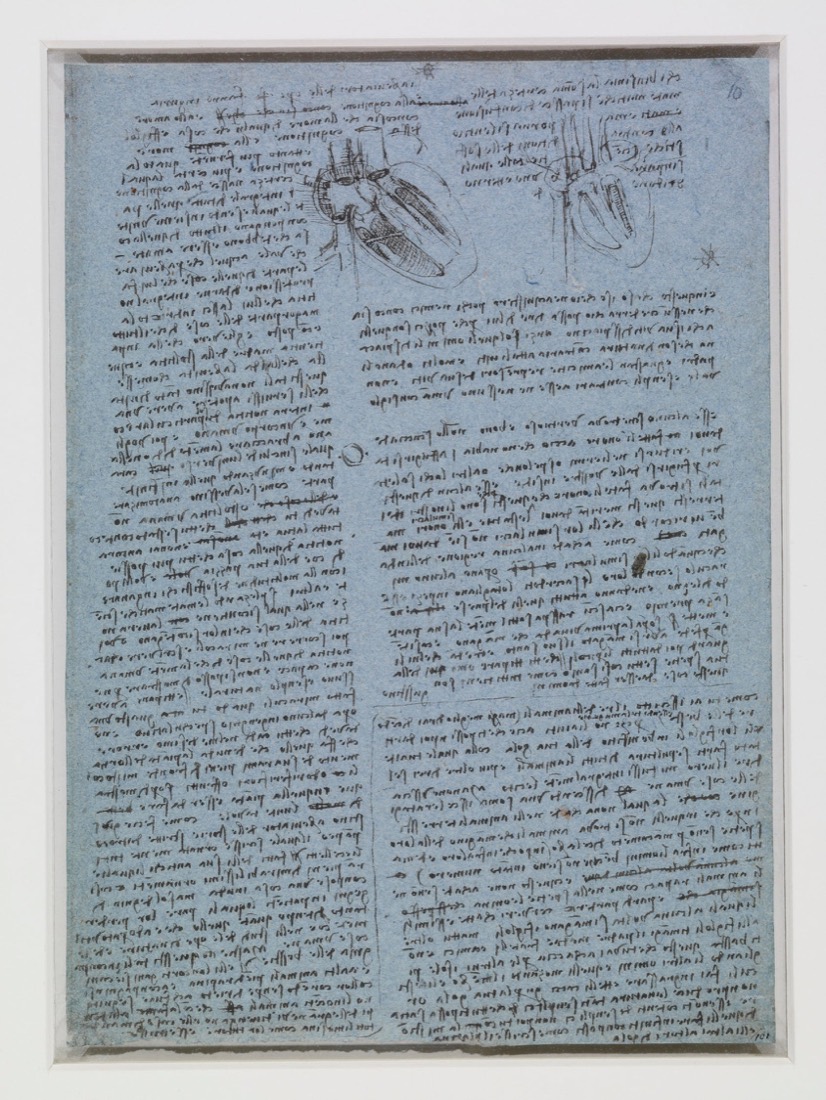
Folio 23e48a22
Italiano
Carissimo padre,
scrivo con la mano che trema — la stessa che da ragazzo disegnava gli angeli nella bottega del Verrocchio, e che voi, ricordo, guardavate in silenzio, senza troppo lodare ma senza distogliere lo sguardo. Oggi trema. Non per febbre né per vino: trema come la fiamma della candela quando la finestra è socchiusa, come la superficie del canale al primo vento della sera. I medici dicono che è l’età, il nervo che si stanca. Io dico che la mano ha semplicemente imparato a dubitare — e nel dubbio, continua.
Vi scrivo perché la pagina è paziente dove io non lo sono. Perché ciò che non è scritto fugge, e io dimentico, e non voglio dimenticare certe cose: il modo in cui la luce stamattina cadeva sull’acqua ferma, il colore del cielo subito prima che il sole sparisse ieri, il pensiero che mi è venuto lavorando alla Sant’Anna — un pensiero sulla gravità, sul peso dell’aria, che non so se riuscirò mai a mettere in prova ma che esiste, qui, su questo foglio. Esiste perché l’ho scritto, e forse un giorno un altro lo leggerà e lo capirà meglio di me.
Il diario — lo chiamo così, anche se non è un diario — è il solo ritratto onesto che ho fatto. Non lusinga, non corregge. Conserva l’uomo che ero dieci anni fa, che vedeva cose che ora non vedo più, e non vedeva quelle che ora mi paiono evidenti. Rileggo, e trovo uno che non è un estraneo, ma non è me. Forse voi, che avete passato la vita a stendere atti e testamenti, capite questa cosa: che la scrittura fissa un momento, e quel momento resta, mentre noi andiamo.
A volte mi chiedo se tutto questo scrivere non sia un modo di trattenere ciò che sta sfuggendo. La mano trema, sì, ma scrive. E mentre scrive, dimentico il tremore. C’è un progetto per deviare il fiume, qui in Francia. Disegno chiuse, canali, macchine per sollevare l’acqua. Il re mi ascolta con pazienza, ma io so che sono un vecchio che disegna utopie. Eppure, quando la matita scorre, il tremore si placa. È come se la mente prendesse il controllo della carne, o forse è la carne che si ricorda di essere stata fatta per questo.
La notte scorsa ho sognato i colli di Vinci. L’aria ferma dell’estate, il frinire delle cicale. Voi eravate giovane, e io bambino. Mi tenevate la mano — quella che ora trema — e mi dicevate: «Guarda, Lionardo, guarda». Non ricordo cosa dovevo guardare. Forse tutto.
Vi abbraccio con affetto, e vi chiedo di non preoccuparvi per me. Il corpo si logora, ma la curiosità no. Scriverò finché la mano regge, o forse oltre.
Vostro figlio affettuoso, Lionardo
Dal castello di Clos Lucé, presso Amboise, in questo giorno di fine settembre, l’anno 1526.
English
Dearest father,
I write with the hand that trembles — the same that as a boy drew angels in Verrocchio’s workshop, and which you, I remember, watched in silence, without too much praise but without turning your gaze away. Today it trembles. Not from fever or wine: it trembles like the candle flame when the window is ajar, like the surface of the canal at the first evening breeze. The doctors say it is age, the nerve growing weary. I say the hand has simply learned to doubt — and in doubt, it continues.
I write to you because the page is patient where I am not. Because what is not written flees, and I forget, and I do not want to forget certain things: the way the light fell this morning on the still water, the colour of the sky just before the sun disappeared yesterday, the thought that came to me while working on the Sant’Anna — a thought about gravity, about the weight of air, which I do not know if I will ever be able to test but which exists, here, on this sheet. It exists because I have written it, and perhaps one day another will read it and understand it better than I.
The diary — I call it that, though it is not a diary — is the only honest portrait I have made. It does not flatter, it does not correct. It preserves the man I was ten years ago, who saw things I no longer see, and did not see those that now seem evident to me. I reread, and I find one who is not a stranger, but is not me. Perhaps you, who have spent your life drafting deeds and wills, understand this: that writing fixes a moment, and that moment remains, while we go on.
At times I wonder if all this writing is not a way of holding onto what is slipping away. The hand trembles, yes, but it writes. And while it writes, I forget the tremor. There is a project to divert the river, here in France. I draw locks, canals, machines to lift water. The king listens to me with patience, but I know I am an old man drawing utopias. Yet, when the pencil flows, the tremor calms. It is as if the mind takes control of the flesh, or perhaps the flesh remembers it was made for this.
Last night I dreamed of the hills of Vinci. The still air of summer, the chirring of the cicadas. You were young, and I a child. You held my hand — the one that now trembles — and you said to me: “Look, Lionardo, look.” I do not remember what I was meant to look at. Perhaps everything.
I embrace you with affection, and I ask you not to worry for me. The body wears out, but curiosity does not. I shall write as long as the hand holds out, or perhaps beyond.
Your affectionate son, Lionardo
From the castle of Clos Lucé, near Amboise, on this day at the end of September, the year 1526.