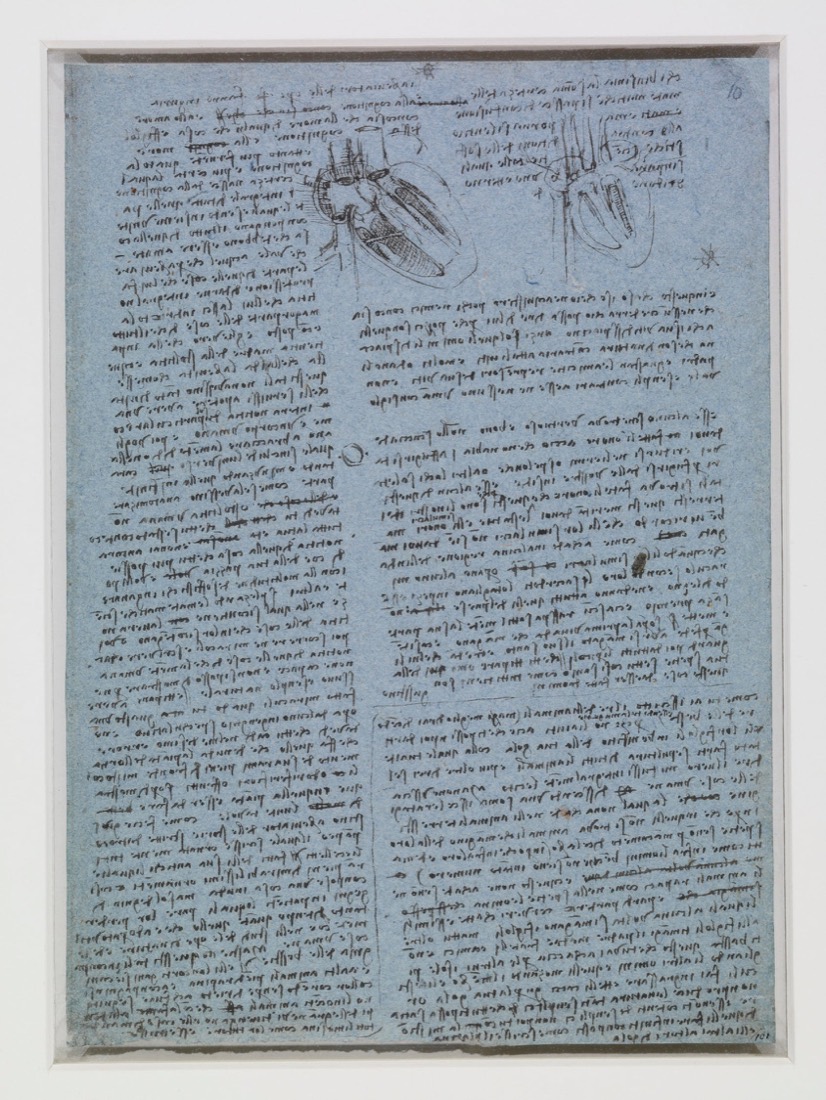
Ciclo CVIII
28 Maggio, anno del Signore 1518 — Cloux
Three things today, and I cannot say which led to which.
First: the water. I have been watching the Loire分流 where it meets the smaller channel near the eastern wall. The engineers wish to build a lock, and I sketched it — the gate, the flow, how the water finds its level regardless of the shape of the container. Hæc omnia de Fluido subtilissimo intelligenda sunt — all these things are to be understood of the most subtle fluid. The water does not care about the stone. It moves according to its own nature, filling every cavity, pressing equally in all directions. The subtle fluid — call it spirit, call it anima mundi — behaves likewise. It does not belong to the vessel. The vessel merely gives it temporary shape.
Second: the young men at court. Fijmaii — I write the name as it sounds, for I have not seen it spelled — and the other one, the Florentine, whose hand shook when he held the compass. Di tenerne — to have them, to keep them. Emprc in cafaviuid ogni specie — I lose the thread of the Italian here, the pen will not cooperate, but the sense is: he tried every kind, every method, and still the line wavered. I watched him and saw myself at his age, and saw also what he cannot yet see — that the trembling is not the enemy of the line. The trembling is the line, if one knows how to let it speak. He wished to make the hand still. I told him: the stillness you seek is in the acceptance of motion. He did not understand. He will.
Third — and here the three become one — I was cleaning my brushes this evening and found a hair from the fine sable caught in the ferrule. It had been there for months, I think. And yet every stroke it touched carried its slight resistance, its tiny deviation. The painting formed around it. The sfumato on the cheek of the Saint Anne — was that not shaped in part by a hair I never noticed? The imperfection was inside the work, not opposed to it.
This is what the three observations share:
The medium — water, the hand, the hair in the brush — is never neutral. It is never merely a tool through which the will passes unchanged. The subtle fluid carries its own intelligence. The trembling hand writes its own correction. The hidden hair paints its own softness. The engineer who thinks he commands the water is commanded by it. The young man who fights his hand fights the very source of his line. The painter who demands a perfect brush will never find the accident that makes the face breathe.
What they are about together — all three — is the intelligence of the medium. Not the mind using matter. Matter thinking through the mind. The Maker did not breathe life into inert clay. The clay was already alive, already knowing how to become. We do not impose form. We collaborate with what already wishes to take shape.
Tell this to the engineers. Tell this to the boy with the compass. Tell this to no one — they will learn it themselves, or they will not, and the canal will be built either way, and the painting will dry, and the hair will fall from the brush and be swept into the floor, and the subtle fluid will move on to the next vessel, the next trembling hand, the next page.
La candela è bassa.
Tomorrow, perhaps, the lock again.