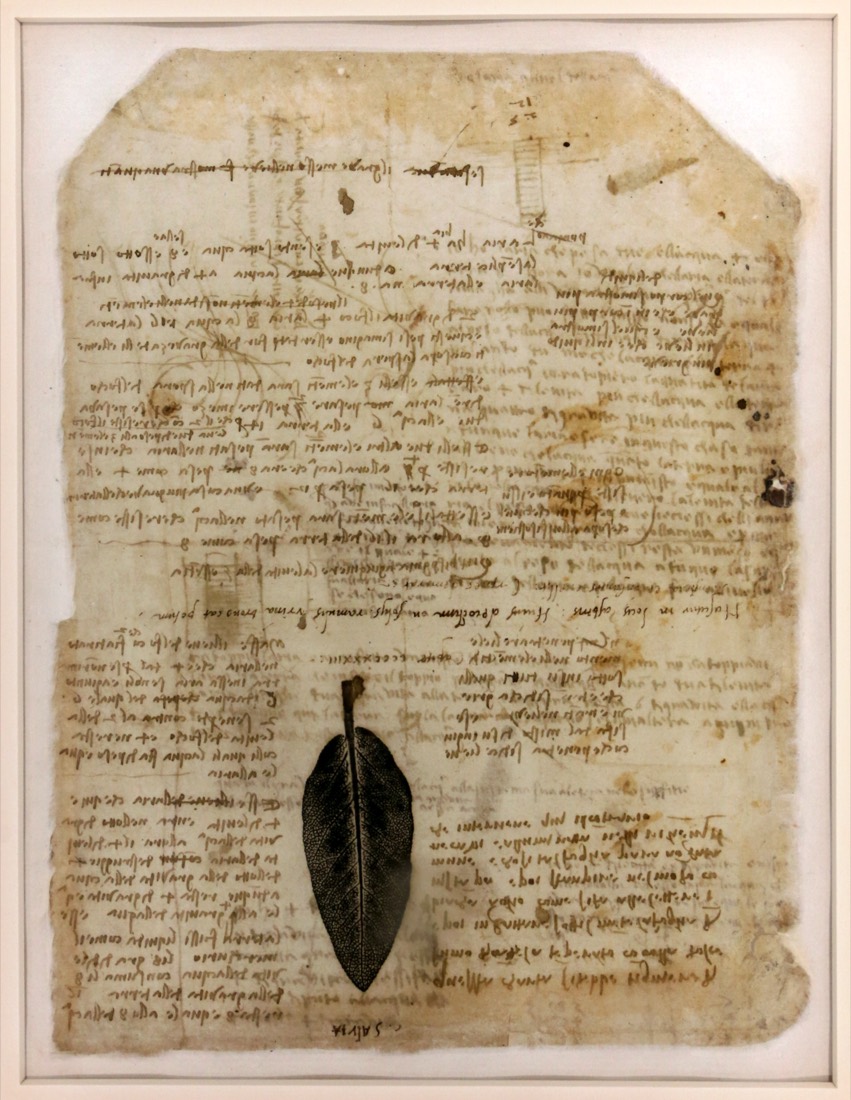
To Piero
Padre carissimo,
I write to you from Amboise, where the river Loire moves with a slowness that deceives — it seems still, but it carries everything: leaves, the reflections of clouds, the small boats of fishermen who do not know they are being watched by a man who has spent his life trying to understand how water refuses to be still and yet appears so. I think of you when I watch it. You were like that — moving always, papers and clients and the affairs of men, and yet to me as a boy you seemed fixed, immovable, a pillar in the house on Via dei Gondi that I was permitted to enter but never quite to inhabit.
My hand trembles now, padre. I will not lie to you, as I would not lie to a confessor, though I have been a poor penitent. The fingers that drew the muscles of the horse in Verrocchio’s workshop — you remember, you saw the cartoon, you said nothing but I saw you look — those fingers now shake as a leaf shakes in November. The physicians here say it is the age, the cold, the damp of this French river valley that enters the joints and makes them strangers to the will. Perhaps. But I think it is something else. I think the hand knows what the mind refuses: that the time remaining is not sufficient for what was intended.
And yet I draw. Every morning, when the light comes through the window of the manor that King Francis has given me — a generous man, this king, generous in a way that makes me uneasy, as though the generosity were a kind of net — every morning I take the silverpoint or the chalk and I draw. The hand trembles and the line wavers and what should be the curve of a forearm becomes something else, something accidental, and I stop and look at it and sometimes the accident is better than the intention. This is a terrible thing to learn so late: that the flaw may be the truth.
I have been studying the heart. Not the theological heart, not the heart of the sermons I heard as a boy in the churches of Florence where you sometimes took me, though I was not baptized in your name but in the name of the Church and the name you gave me was a gift separate from the sacrament — I mean the organ itself, the muscle, the four chambers, the valves that open and close like the doors of a cathedral, and I have found that the blood moves in a way no physician has described, that Galen was wrong, that the old authorities were wrong about this as about so many things, and I have drawn it, padre, I have drawn the heart as it is, not as it was said to be, and the drawing is the most honest thing I have done in years, more honest than the paintings that men praise, because no one will see it, it is for the page, for the book, for the record of the eye.
You gave me the name. You gave me to Verrocchio. You did not give me legitimacy — that was not in your power, or perhaps not in your will, I have never known which, and at this late hour it matters less than it once did, though it mattered terribly once, I will not pretend otherwise — but you gave me the workshop, the chalk, the chance to see that the world could be understood by looking at it with sufficient patience. For that I owe you still. I owe you more than I have repaid.
The king asks me to design festivals, machines of war, canals for the river. I do these things. They are not the things I would choose, but a man in his late years does not choose as a young man chooses. He accepts. He works. He draws the trembling line and hopes it means something.
I think of Florence. I think of the house. I think of you at your desk with the papers of the notary, the careful hand that wrote the contracts and the deeds, and I wonder whether you ever looked up from those papers and thought of the boy in the workshop who was drawing horses and angels and the folds of cloth on a wooden mannequin. I wonder whether you were proud. You were not a man who said such things. Neither am I. But the wondering is its own kind of speech.
The candle is low. The hand aches. Tomorrow I will draw again.
Vostro figlio affettuoso,
Leonardo