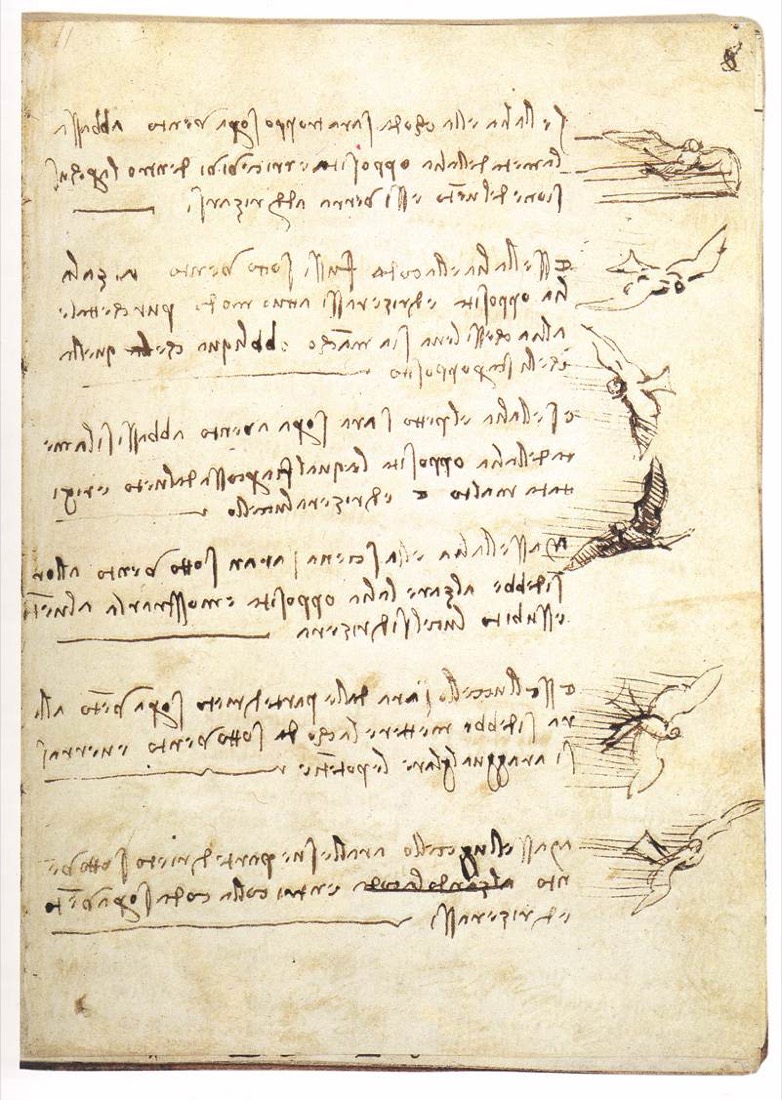
To Anonymous
A chi leggesse —
You will forgive an old man his repetitions. I write to you across a distance I cannot measure — not of miles, for miles I have traversed and know the weight of them — but of years, of the strange folding of time that permits a hand trembling in the Loire valley to reach one steady, perhaps, in a century I will not name.
The hand. You will want to know about the hand.
It began — when did it begin? — not with pain, not with any dramatic seizure such as the physicians describe in their Latin, but with a hesitation. A pause between the intention and the stroke. As though the nerve were a canal-boat that must wait for the lock to fill before it could proceed. I would draw a line — a simple line, the kind a child makes — and find it arrived not where I willed but slightly after, slightly beside, as though my obedience to myself had grown imperfect.
This was perhaps five years ago. Perhaps six. I do not keep a journal of the body. I should have.
Now. Now the tremor is a companion. I know its moods. In the morning, after sleep has reset the muscles to their false innocence, I can write almost as before. The letters form themselves with something approaching their old disegno. By afternoon — Dio mio — by afternoon the hand has remembered its rebellion, and each stroke is a negotiation between what I see in the mind’s eye and what the fingers permit.
I have learned things from this.
I have learned that the line does not belong to the hand. The line belongs to the eye, to the judgment, to that interior faculty which I have spent a lifetime trying to understand and which I will die without understanding. The hand is merely the servant, and like all servants, it has its limits, its fatigue, its days of refusal. When it trembles, the line trembles. But the intenzione — the intention — remains steady. I watch my own hand fail to render what I see, and I understand, perhaps for the first time with full clarity, that the seeing and the making are not one act but two.
This should be obvious. It was not obvious to me.
I think of the Last Supper — how I labored over the hands of the apostles, each gesture a theology, each finger’s curl a sentence in the argument of the scene. I rendered those hands with a certainty I no longer possess. Not because I have forgotten how — the knowledge sits in the eye as it always sat — but because the instrument has changed. It is as though a lutenist were given the same lute but with strings of different tension. The music in the mind is unchanged. The sound that emerges is not.
And yet.
And yet there is something the tremor gives that steadiness did not. I do not wish to romanticize affliction — I have seen too much affliction in others to dress it in false nobility. But the trembling hand, forced to simplify, forced to find the essential stroke and abandon the ornamental, discovers economies that the fluent hand would never have sought. I watch my own drawings grow spare. I watch them grow, perhaps, closer to the truth of what I see, which was always simpler than my skill allowed me to confess.
The French physicians offer their remedies. Leeches, I think. Some tincture. I decline. Not from pride — or not only from pride — but because the tremor has become a kind of teacher, and I am not yet done learning what it has to teach.
What does it teach?
Patience, which I have never possessed. Humility, which I have possessed even less. And something else — something I approach with difficulty, because it touches on matters I am not certain the page should hold.
It teaches that the soul does not require the hand’s perfection to do its work. That the disegno — the divine proportion I have spent my life tracing in water and bone and the flight of birds — exists whether or not my fingers can render it. That I am not, in the end, my hand. I am the one who watches the hand. And the one who watches — questo — this does not tremble.
I do not know what to make of this. I set it down.
The candle is low. The window shows the first grey of a morning I did not expect to see when I sat down. The canal — I can hear it from here, or perhaps I imagine I can hear it — the canal moves as it moves, without tremor, without hesitation, finding its way to the river by a path it did not choose but follows perfectly.
I would like to be the canal.
I am not the canal. I am the old man at the desk, writing to one he will not meet, in a hand that betrays him, of things he does not fully understand, by a light that will not last.
But the page receives it. The page, carissimo, does not tremble.
Vostro per quanto serve —
Lionardo