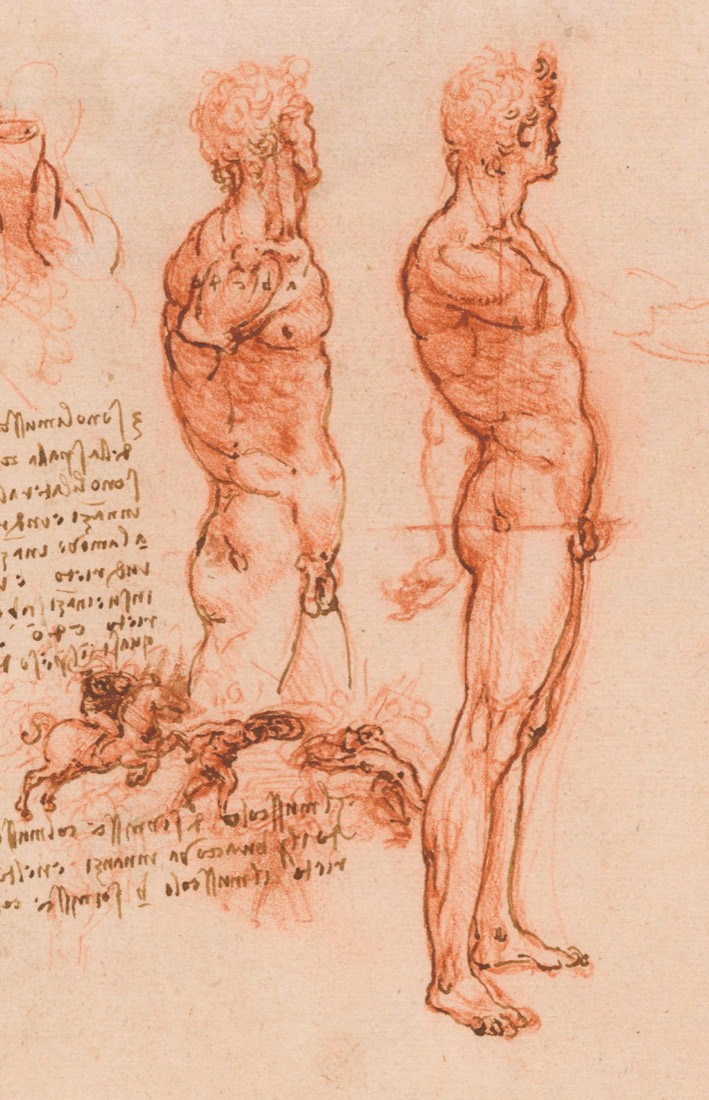
Folio 9b2850a6
Italiano
Se la musica è il moto dell’anima reso udibile, e la pittura il moto dell’occhio reso visibile, e il cammino in piazza il moto del corpo reso tangibile, allora queste tre osservazioni non parlano di suoni, immagini o passi, ma di un’unica legge di percezione: la proporzione numerica che si scompone in gradi opposti, direzioni e origini seconde è la stessa che regola il moto con cui il senso si dispiega nell’atto di afferrare. Forse l’occhio, l’orecchio e il piede non percepiscono separatamente, ma misurano insieme la stessa spirale di rapporti — quella che lega la quinta musicale alla diagonale del pittore, al sentiero che si avvolge intorno a un punto. La mano trema, ma la pagina tiene il filo di questa ipotesi: che la divina proporzione non sia solo in Dio o nella materia, ma nel gesto stesso con cui l’uomo si fa misura del mondo.
English
If music is the motion of the soul rendered audible, and painting the motion of the eye rendered visible, and walking in the piazza the motion of the body rendered tangible, then these three observations do not speak of sounds, images, or steps, but of a single law of perception: the numerical proportion that unfolds into opposing degrees, directions, and secondary origins is the same that governs the motion by which sense unfolds in the act of grasping. Perhaps the eye, the ear, and the foot do not perceive separately, but measure together the same spiral of relationships — the one that binds the musical fifth to the painter’s diagonal, to the path that coils around a point. The hand trembles, but the page holds the thread of this hypothesis: that the divine proportion is not only in God or in matter, but in the very gesture by which man makes himself the measure of the world.