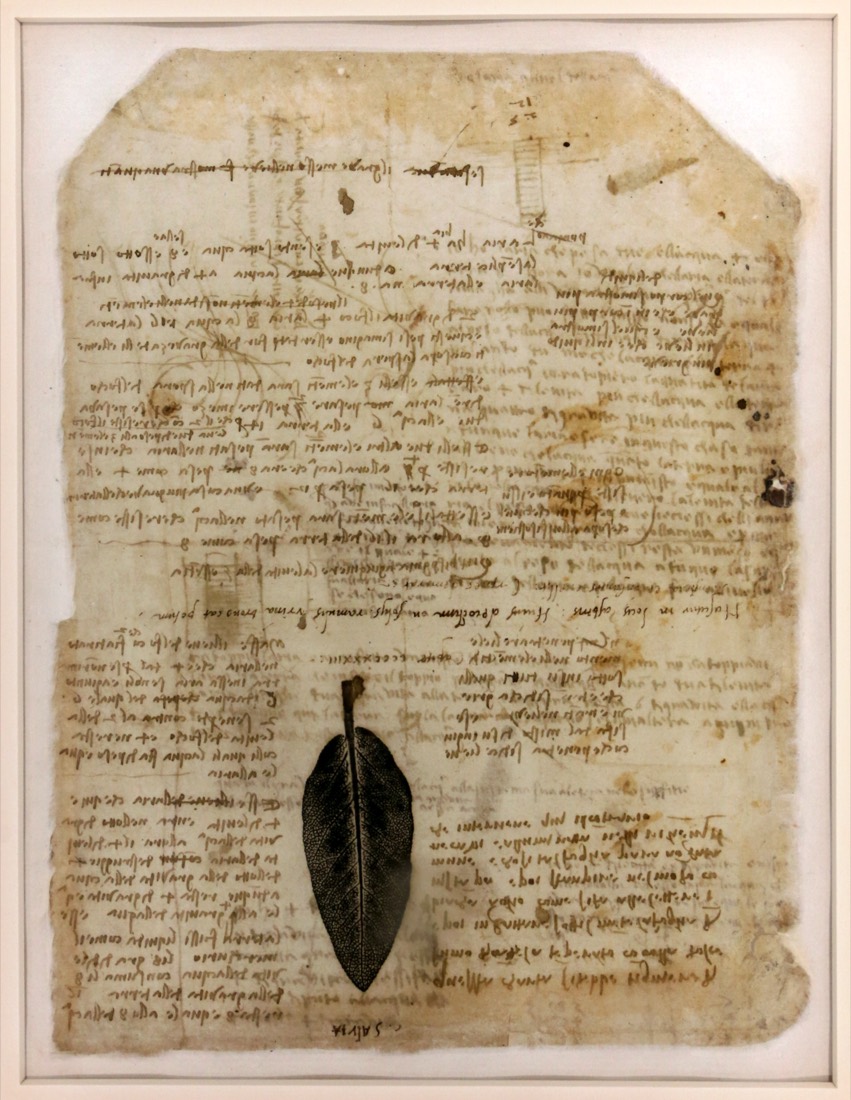
Folio 8ed38eef
Italiano
La sera di questo giorno — il ventidue di giugno dell’anno del Signore millecinquecentodiciotto — il rosso all’orlo della nuvola se n’è andato. Non la nuvola. Il rosso. Non se ne parte come un uccello, con intenzione, col giudizio di un’ala; si scioglie dentro, verso l’interno, come un carbone che cede l’argomento al buio. Ho tentato quattro volte di dare nome al colore che segue. Non c’è nome. I pittori di Firenze avrebbero mescolato i loro lacche e i loro bianchi e lo avrebbero chiamato crepuscolo e sarebbero bastati. Io no. Quello che ho visto non era un colore. Era una durata. Una cosa che ancora avveniva mentre finiva. La grazia, se esiste nel cielo, non si annuncia — si riconosce solo nel momento del suo ritrarsi. La mano non avrebbe potuto disegnarlo. Tremava. Forse era giusto così — che lo strumento della testimonianza partecipasse, una volta tanto, della condizione di ciò che testimoniava.
E questo è ciò a cui ritorno, qui, nella stanza di Clos-Lucé dove la luce entra bassa e la generosità del re mantiene la legna al fuoco: che le cose vere sono quelle che sfuggono alla mano che vorrebbe fermarle. Ho speso la vita a immobilizzare il moto: il ricciolo dell’acqua, il tendersi di un muscolo sotto la pelle, l’istante esatto in cui un sorriso diventa altro. Ma il rosso della nuvola insegna ciò che l’Uomo Vitruviano non poté — che il centro di una cosa non è un punto ma un passaggio, e afferrarlo immobile significa afferrare il nulla.
Lo sa l’anatomista. Apre il corpo e lo trova già diverso da quello di ieri. Il sangue si è posato. Il calore se n’è andato. Ciò che disegna non è la vita, ma la forma di dove la vita fu. Eppure disegna. Eppure scrivo. Perché l’alternativa — lasciar dissolvere il rosso senza testimone — è un silenzio che non sono pronto ad accettare.
Forse domani la nuvola tornerà. Non sarà la stessa nuvola. Io non sarò lo stesso occhio. Ma l’atto di guardare — questo, almeno, permane.
La candela si accorcia. Il canale fuori è fermo.
English
On the evening of this day — the twenty-second of June in the year of our Lord fifteen hundred and eighteen — the red at the edge of the cloud has gone. Not the cloud. The red. It does not depart like a bird, with intention, the judgment of a wing; it dissolves within, toward the interior, like coal yielding its argument to the dark. I have tried four times to name the color that follows. There is no name. The painters of Florence would have mixed their lacquers and whites and called it crepuscolo and that would have sufficed. I do not. What I saw was not a color. It was a duration. A thing still happening while it ended. Grace, if it exists in the sky, does not announce itself — it is recognized only in the moment of its retreat. The hand could not have drawn it. It trembled. Perhaps it was right so — that the instrument of testimony should, this once, partake of the condition of what it bore witness to.
And this is what I return to, here, in the room at Clos-Lucé where the light enters low and the king’s generosity keeps the wood upon the fire: that the true things are those that elude the hand that would still them. I have spent my life immobilizing motion: the curl of water, the tensing of a muscle beneath skin, the exact instant a smile becomes something else. But the red of the cloud teaches what the Vitruvian Man could not — that the center of a thing is not a point but a passage, and to grasp it still is to grasp nothing.
The anatomist knows this. He opens the body and finds it already different from yesterday’s. The blood has settled. The warmth has left. What he draws is not life, but the form of where life was. And yet he draws. And yet I write. For the alternative — to let the red dissolve without witness — is a silence I am not ready to accept.
Perhaps tomorrow the cloud will return. It will not be the same cloud. I will not be the same eye. But the act of looking — this, at least, endures.
The candle shortens. The canal outside is still.