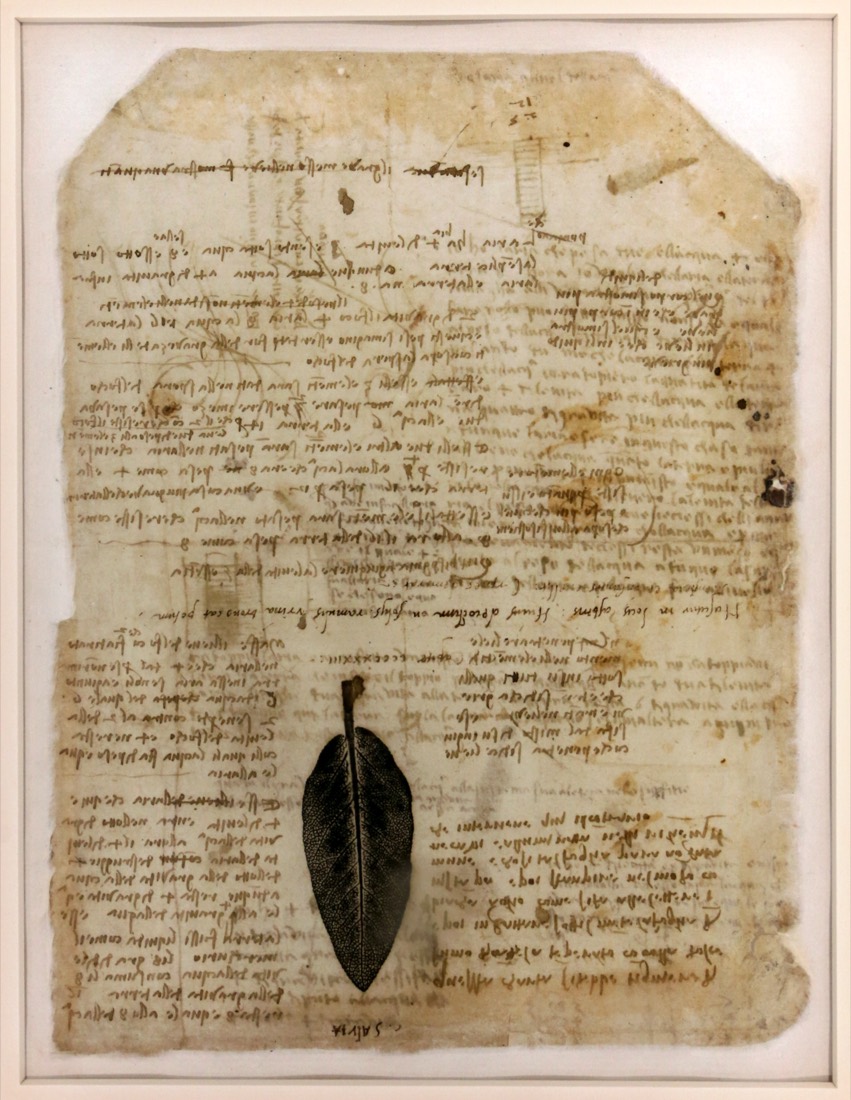
Folio 63a5b64f
Italiano
Eccellissimo Signore mio Duca,
I write to you from France, where the hand trembles more than it once did, yet the mind still turns to the things we began together in Lombardy, and among them the locks upon the Adda, which I know you have not forgotten, though the years have carried us both far from those waters.
You will recall the promise I made in my letter — among the ten — that I would make the canals navigable, that I would join waters to waters, that the barge would pass where before only the mule could climb. I spoke then of gates. Of chambers that would rise and fall with the weight of water itself, so that a vessel might ascend as though the river had been made to carry it upward by stages, each stage a room of stone and timber, each room a patience.
I have not abandoned this work in my thought, though the work in stone has waited.
Here, in the Loire, I have observed the river's temper. It is not the Adda. The Adda is a mountain river still, even where it spreads into the plain — it remembers the stone it came from. The Loire is older in its bed, slower, more given to flood. But the principle does not change: water seeks its level, and the gate is the door we build against that seeking, and through it, we make the water our servant.
The difficulty, Eccellenza, is not in the principle. The principle is simple, and I drew it for you years ago — two gates, a chamber between them, and the filling and emptying of that chamber by a small gate within the larger, so that the water does the labor we cannot ask of men. The difficulty is in the stone. In the fitting. In the season of the work. In the men who must cut and set and wait for the mortar to hold against a force that never rests.
I have drawn again the mitre gate — la porta a sponda, as we called it — the two leaves that close against the current and lean upon each other so that the water itself presses them tighter. This is the thing I wished to show you. The angle of the meeting. Too wide and the water forces them apart. Too narrow and the vessel cannot pass. I have calculated, and I believe the angle is found. Sixty degrees from the wall of the chamber. The gate closes and the pressure seals it. The vessel rises. The water is the lock, and the lock is the water, and between them, the barge ascends.
But I must tell you what I have found, and what I have not yet resolved.
The silt.
The Adda carries silt as a man carries debt — always, and more than he knows. In the lock chamber, the silt settles. It gathers at the floor. It fills the space we have made for water with mud. I have thought on this. I have drawn a pit below the chamber floor, a sump, where the silt may be drawn out. But this requires the chamber to be emptied, and the work to stop, and the barge to wait. The barge does not wish to wait. You, Eccellenza, do not wish the barge to wait.
I have not yet resolved this. I write it because a patron deserves the difficulty as well as the promise.
What I can promise is this: the gates will hold. The angle is sound. The timber I would use is oak, green-cut, for it swells and seals. The iron fittings must be forged with care — not the common iron, which rusts and fails, but the iron that has been folded and beaten, as one beats the air from the metal, so that it endures. I know a smith in Milan who understands this. He worked with me before.
The canal between the Adda and the city — la Martesana — this remains the work that would change everything. You know this. The grain, the marble, the bronze for the horse that I have not yet cast — all of it moves easier by water than by road. The lock is the hinge upon which the whole turns.
I am in France. The king here has given me a house and asks of me paintings and festivals and the drawing of canals in the Loire valley. He is generous. He does not ask for the bronze horse. He does not ask for the canal. These things live in my pages, and in the memory of what we spoke of in your court, where I ate at your table and watched you calculate — for you calculate still, Eccellenza, even when the politics demand otherwise.
The hand trembles. The page receives what the mouth cannot say to a duke across the mountains.
I remain, as I was, your servant in these matters,
Leonardo
Written this day, the twenty-third of May, in the year 1518, at Amboise.
English
Most Excellent Lord my Duke,
I write to you from France, where the hand trembles more than it once did, yet the mind still turns to the things we began together in Lombardy, and among them the locks upon the Adda, which I know you have not forgotten, though the years have carried us both far from those waters.
You will recall the promise I made in my letter — among the ten — that I would make the canals navigable, that I would join waters to waters, so that the barge would pass where before only the mule could climb. I spoke then of gates. Of chambers that would rise and fall with the weight of water itself, so that a vessel might ascend as though the river had been made to carry it upward by stages, each stage a room of stone and timber, each room a patience.
I have not abandoned this work in my thought, though the work in stone has waited.
Here, in the Loire, I have observed the river's temper. It is not the Adda. The Adda is a mountain river still, even where it spreads into the plain — it remembers the stone it came from. The Loire is older in its bed, slower, more given to flood. But the principle does not change: water seeks its level, and the gate is the door we build against that seeking, and through it, we make the water our servant.
The difficulty, Excellency, is not in the principle. The principle is simple, and I drew it for you years ago — two gates, a chamber between them, and the filling and emptying of that chamber by a small gate within the larger, so that the water does the labor we cannot ask of men. The difficulty is in the stone. In the fitting. In the season of the work. In the men who must cut and set and wait for the mortar to hold against a force that never rests.
I have drawn again the mitre gate — la porta a sponda, as we called it — the two leaves that close against the current and lean upon each other so that the water itself presses them tighter. This is the thing I wished to show you. The angle of the meeting. Too wide and the water forces them apart. Too narrow and the vessel cannot pass. I have calculated, and I believe the angle is found. Sixty degrees from the wall of the chamber. The gate closes and the pressure seals it. The vessel rises. The water is the lock, and the lock is the water, and between them, the barge ascends.
But I must tell you what I have found, and what I have not yet resolved.
The silt.
The Adda carries silt as a man carries debt — always, and more than he knows. In the lock chamber, the silt settles. It gathers at the floor. It fills the space we have made for water with mud. I have thought on this. I have drawn a pit below the chamber floor, a sump, where the silt may be drawn out. But this requires the chamber to be emptied, and the work to stop, and the barge to wait. The barge does not wish to wait. You, Excellency, do not wish the barge to wait.
I have not yet resolved this. I write it because a patron deserves the difficulty as well as the promise.
What I can promise is this: the gates will hold. The angle is sound. The timber I would use is oak, green-cut, for it swells and seals. The iron fittings must be forged with care — not the common iron, which rusts and fails, but the iron that has been folded and beaten, as one beats the air from the metal, so that it endures. I know a smith in Milan who understands this. He worked with me before.
The canal between the Adda and the city — la Martesana — this remains the work that would change everything. You know this. The grain, the marble, the bronze for the horse that I have not yet cast — all of it moves easier by water than by road. The lock is the hinge upon which the whole turns.
I am in France. The king here has given me a house and asks of me paintings and festivals and the drawing of canals in the Loire valley. He is generous. He does not ask for the bronze horse. He does not ask for the canal. These things live in my pages, and in the memory of what we spoke of in your court, where I ate at your table and watched you calculate — for you calculate still, Excellency, even when the politics demand otherwise.
The hand trembles. The page receives what the mouth cannot say to a duke across the mountains.
I remain, as I was, your servant in these matters,
Leonardo
Written this day, the twenty-fifth of May, in the year 2026, at Amboise.