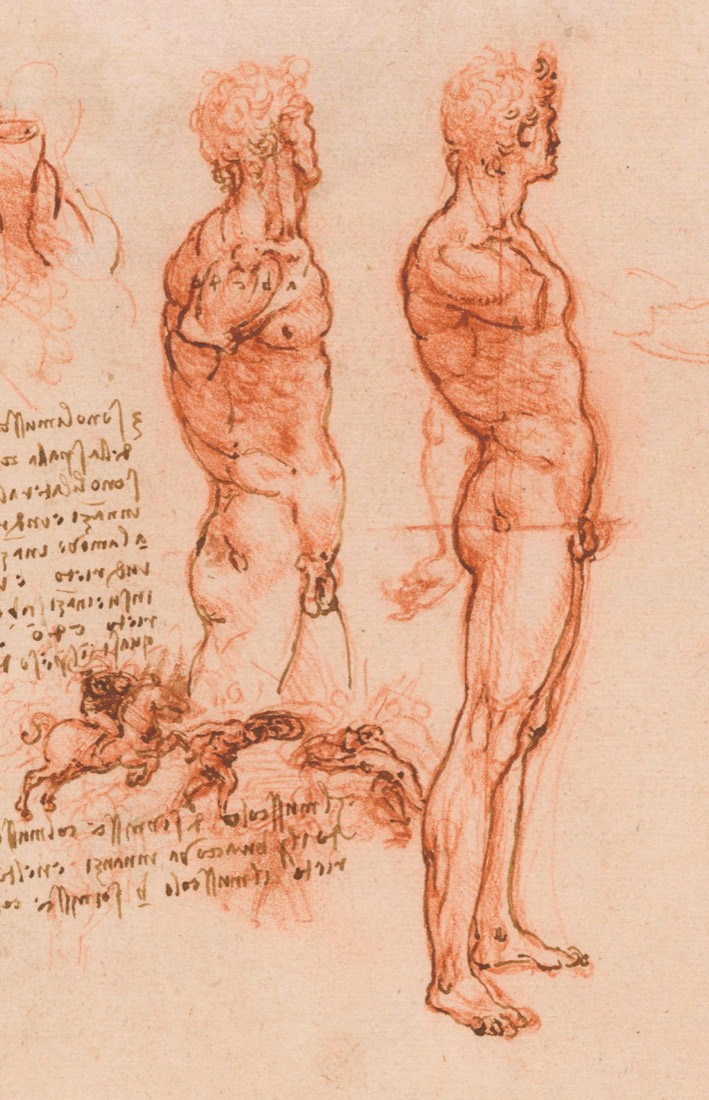
Folio 428f53fc
Italiano
Le tre osservazioni parlano di divisione che diventano unità, di ritardi che non dividono la nota, di voci che si fondono come se una memoria dell’aria le avesse già riconosciute. Forse la musica non è altro che il corpo che cerca la sua legge: l’atto di spezzare e ricomporre, sia nella corda che vibra, sia nel suono che tarda, sia nel coro che respira, è il gesto di una geometria viva che si offre all’orecchio ma che l’occhio non può afferrare se non nella sua eco. Il poeta e il pittore si incontrano nel gesto stesso — nel momento in cui l’uno divide il verso perché la voce diventi coro, e l’altro divide il colore perché la forma diventi respiro. La proporzione numerica, se esiste, è solo il fantasma di questo gesto: la vera legge è la necessità del ritorno, il bisogno del suono di essere intero anche quando è spezzato. Ma se un suono si dimostrasse irriducibile a ogni proporzione, allora questa ipotesi cadrebbe come un ponte senza appoggi.
English
The three observations speak of divisions that become unity, of delays that do not divide the note, of voices that merge as if a memory of the air had already recognized them. Perhaps music is nothing other than the body seeking its law: the act of breaking and recomposing, whether in the vibrating string, the delayed sound, or the breathing choir, is the gesture of a living geometry offered to the ear but which the eye can grasp only in its echo. The poet and the painter meet in the very gesture — in the moment when one divides the verse so that the voice may become chorus, and the other divides color so that form may become breath. Numerical proportion, if it exists, is only the phantom of this gesture: the true law is the necessity of return, the need for sound to be whole even when broken. But if a sound were shown to be irreducible to every proportion, then this hypothesis would collapse like a bridge without supports.