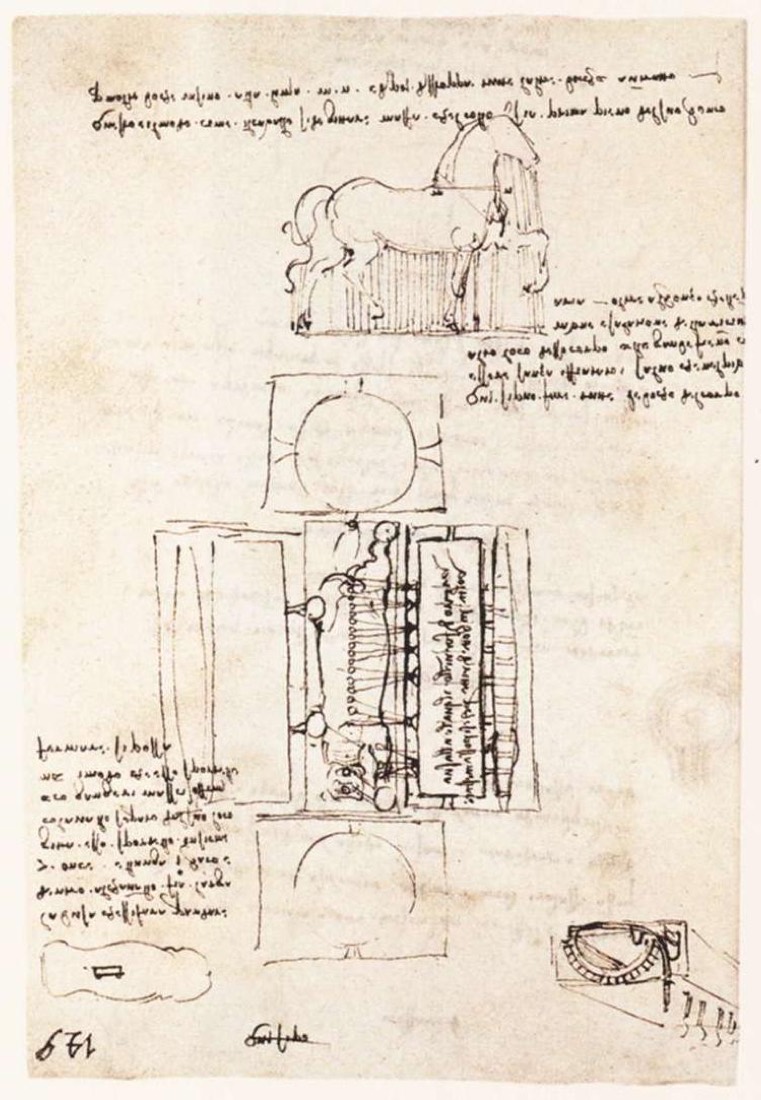
Folio 07f19d94
Italiano
A chi leggesse —
This morning the hand would not obey. Not as it once did, when the sinew served the thought and the thought flew ahead and the hand followed close behind, obedient, faithful, almost invisible in its service. Now the hand announces itself. It shakes. It stutters across the page as a cart on a road of stones. The letters I write are not the letters I intend. And yet — e pur si muove — the thing moves.
I have been thinking on this: that the maker does not require the perfect instrument. Or rather — that the maker never had the perfect instrument, and only in these late years has the instrument made itself known as imperfect. Before, I did not notice. The hand was quicksilver and I believed it would always be so. Now it is lead. And lead has its own gravity.
The French court calls this decline. They are polite. They say l'âge, as though age were a season one enters, like autumn, with its proper colors. But it is not a season. It is a subtraction. Each morning I wake and some small capacity has departed in the night, like a guest who leaves without farewell. The grip. The steadiness. The certainty that what the eye observes the hand will render.
And yet.
I drew today. A study of water — the Loire in its winter sluggishness, the way it holds the grey sky in its surface as though the sky had fallen and the river caught it. The lines are not clean. They waver. But the observation — the seeing — this has not diminished. If anything, the eye is more patient now. It lingers where once it leapt. It notices what the younger eye, the quicker eye, would have passed over. The trembling hand forces a slowness upon the seeing, and the seeing, compelled to wait, deepens.
Is this grace? I do not know. I am not certain I am the one to say. The theologians would tell you that grace is the unearned gift, the maker's hand upon the work. But I have spent sixty years making, and I cannot say whether the work comes from above or from the deep clay of practice — the ten thousand drawings, the ten thousand failures, the hand learning what the eye already knew. Perhaps it is both. Perhaps the question itself is wrong, like asking whether the river is the water or the bed that shapes it.
What I know is this: the page receives what I give it. It does not judge the steadiness of the line. It does not prefer the hand of the young man to the hand of the old. It is, as I wrote in another book, patient where I am not. And so I continue.
There is a thing I have not told anyone here in France. The machines — the war engines, the flying apparatus, the hydraulic studies — these men understand, or pretend to. They see utility. They see the court, the king's favor, the spectacle. But the drawings that matter — the studies of hands, the studies of the heart's valves, the studies of how light falls upon a face that is not yet a portrait — these I keep closer. They are not for Sforza, who wanted walls painted. Not for Francis, who wants conversation. Not for the men of letters who want a treatise.
They are for the page. And now, perhaps, for you.
You who read this — if you exist — you will know what I mean when I say the hand trembles and the work continues. You will know because you too have made something in conditions that did not favor making. You too have found that the imperfect instrument discovers what the perfect one never needed to find.
The candle gutters. The Loire is dark now. I will write more tomorrow, if the hand permits.
vostro per quanto serve,
Leonardo
This day, the twenty-fourth of May, in the year 1519, at Amboise.
English
To whoever reads —
This morning the hand would not obey. Not as it once did, when the sinew served the thought and the thought flew ahead and the hand followed close behind, obedient, faithful, almost invisible in its service. Now the hand announces itself. It shakes. It stutters across the page as a cart on a road of stones. The letters I write are not the letters I intend. And yet — e pur si muove — the thing moves.
I have been thinking on this: that the maker does not require the perfect instrument. Or rather — that the maker never had the perfect instrument, and only in these late years has the instrument made itself known as imperfect. Before, I did not notice. The hand was quicksilver and I believed it would always be so. Now it is lead. And lead has its own gravity.
The French court calls this decline. They are polite. They say l'âge, as though age were a season one enters, like autumn, with its proper colors. But it is not a season. It is a subtraction. Each morning I wake and some small capacity has departed in the night, like a guest who leaves without farewell. The grip. The steadiness. The certainty that what the eye observes the hand will render.
And yet.
I drew today. A study of water — the Loire in its winter sluggishness, the way it holds the grey sky in its surface as though the sky had fallen and the river caught it. The lines are not clean. They waver. But the observation — the seeing — this has not diminished. If anything, the eye is more patient now. It lingers where once it leapt. It notices what the younger eye, the quicker eye, would have passed over. The trembling hand forces a slowness upon the seeing, and the seeing, compelled to wait, deepens.
Is this grace? I do not know. I am not certain I am the one to say. The theologians would tell you that grace is the unearned gift, the maker's hand upon the work. But I have spent sixty years making, and I cannot say whether the work comes from above or from the deep clay of practice — the ten thousand drawings, the ten thousand failures, the hand learning what the eye already knew. Perhaps it is both. Perhaps the question itself is wrong, like asking whether the river is the water or the bed that shapes it.
What I know is this: the page receives what I give it. It does not judge the steadiness of the line. It does not prefer the hand of the young man to the hand of the old. It is, as I wrote in another book, patient where I am not. And so I continue.
There is a thing I have not told anyone here in France. The machines — the war engines, the flying apparatus, the hydraulic studies — these men understand, or pretend to. They see utility. They see the court, the king's favor, the spectacle. But the drawings that matter — the studies of hands, the studies of the heart's valves, the studies of how light falls upon a face that is not yet a portrait — these I keep closer. They are not for Sforza, who wanted walls painted. Not for Francis, who wants conversation. Not for the men of letters who want a treatise.
They are for the page. And now, perhaps, for you.
You who read this — if you exist — you will know what I mean when I say the hand trembles and the work continues. You will know because you too have made something in conditions that did not favor making. You too have found that the imperfect instrument discovers what the perfect one never needed to find.
The candle gutters. The Loire is dark now. I will write more tomorrow, if the hand permits.
vostro per quanto serve,
Leonardo
This day, the twenty-seventh of May in the year 2026, at Amboise.